












A pocket-sized essential oil inhaler can make a lovely part of a busy-day reset - whether you reach for a clearer head before a meeting, a quiet moment on the commute, or a gentler wind-down before bed. But are essential oil inhalers safe? For most healthy adults, using a well-formulated inhaler as directed can be a low-contact way to enjoy aromatic essential oil blends. Safety still depends on the ingredients, the person using it and how it is used.
Unlike oils applied to the skin, an inhaler is designed to deliver aroma through a few light breaths rather than prolonged topical exposure. That does not make it risk-free. Essential oils are highly concentrated plant extracts, and natural ingredients deserve the same thoughtful approach as anything else in your wellness ritual.
How essential oil inhalers work
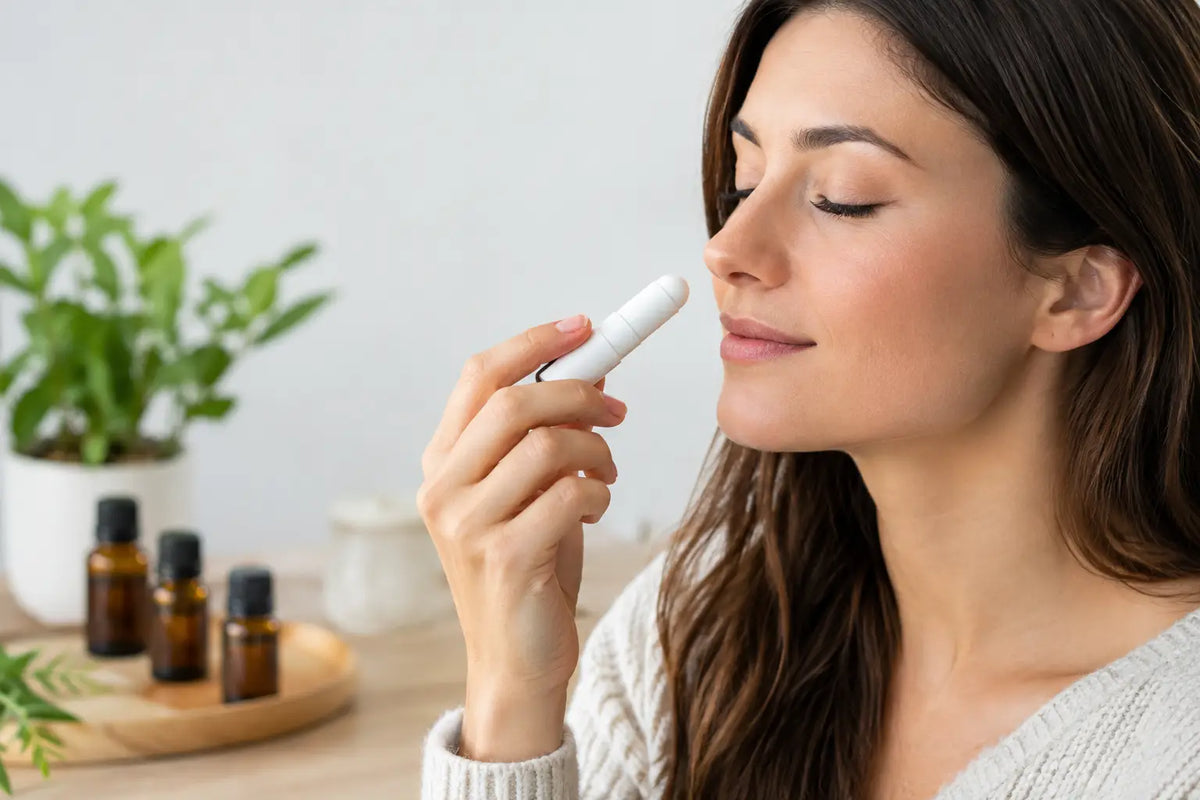
Most personal inhalers contain a small cotton wick or absorbent core infused with an essential oil blend. When you remove the cap and hold it close to, but not inside, one nostril, the aroma travels through the nose as you breathe in gently.
This format is intentionally simple. There is no diffuser mist in the room, no oil on your hands and no need to apply product to your face. It can be especially appealing for people who enjoy scent but have sensitive skin or prefer an easy, on-the-go ritual.
An inhaler is not the same as a medical device, and it should not be used to treat respiratory illness, anxiety, insomnia or any other health condition. Think of it as sensory support: a small cue to pause, breathe and reconnect with how you want to feel.
Are essential oil inhalers safe for most adults?
For a healthy adult, occasional use of a quality essential oil inhaler is generally considered a sensible option when the product is used as labelled. The key word is occasional. A couple of gentle inhalations are very different from repeated, deep breathing for long periods.
The safety of an inhaler also comes down to formulation. A considered blend uses appropriate oils and concentrations for aromatic use. It should have a clear ingredient list, straightforward directions and cautions that help you decide whether it suits you. Avoid improvised blends made with unknown oils, especially if you are new to aromatics or have a history of scent sensitivity.
More is not better. Stronger aromas do not necessarily deliver better results, and overdoing it can irritate the nose, trigger a headache or make nausea more likely. If the scent feels sharp, overwhelming or unpleasant, put the cap back on and step into fresh air.
Who should take extra care?
Essential oils can be wonderfully evocative, but they are not universally suitable. Children, pregnant or breastfeeding people, and anyone managing a health condition should seek personalised advice from a qualified healthcare professional before using an inhaler.
Extra caution is particularly worthwhile for people with asthma, chronic breathing conditions, allergies, migraine triggered by fragrance, epilepsy or chemical sensitivities. Certain aromas may be irritating or may not be appropriate in individual circumstances. A natural label is not a guarantee that every ingredient will agree with every body.
Keep inhalers out of reach of children and pets. Young children are more vulnerable to concentrated essential oils, and a personal inhaler can be mistaken for a toy or something to taste. Never let children use an adult inhaler without professional guidance.
If you have had an allergic reaction to an essential oil, fragrance or botanical ingredient before, check the full ingredient list carefully and choose a different wellbeing ritual where needed.
Stop if your body says no
Your response matters more than the intended benefit on the label. Stop using the inhaler if you notice burning in the nose or throat, coughing, wheezing, shortness of breath, dizziness, nausea, headache, watery eyes or a rash around the nose.
Move to fresh air and seek medical advice if symptoms are severe, do not settle or involve breathing difficulty. In an emergency, call 000. If an essential oil product has been swallowed or there is concern about exposure, contact the Poisons Information Centre on 13 11 26 in Australia.
A safer way to use an essential oil inhaler
Good technique keeps the experience gentle. Remove the cap, hold the inhaler just beneath one nostril and take one or two soft breaths. Repeat beneath the other nostril if desired, then replace the cap. There is no need to insert it into the nostril or inhale forcefully.
Use it in a well-ventilated space, particularly if you know you are sensitive to fragrance. Give yourself a moment between uses rather than reaching for it continuously throughout the day. If you use an inhaler for a particular routine - before sleep, during travel or ahead of a stressful appointment - the ritual itself can be as valuable as the scent.
Do not share your inhaler. It is a personal product that sits close to the nose, so sharing is not ideal from a hygiene point of view. Keep the cap on between uses and store it in a cool, dry spot away from direct sunlight, heat and curious little hands.
Never ingest the contents, apply the wick or oils directly to your skin, or add extra drops to a pre-made inhaler. Essential oil safety is about more than the oil itself - it is also about using the product in the format and amount it was designed for.
Choosing a quality inhaler blend
A quality inhaler should make it easy to understand what you are using. Look for full ingredient transparency rather than a vague mention of “fragrance” or a proprietary blend with no further detail. Clear directions, sensible cautions and an intact package are equally reassuring signs.
The aroma should feel balanced, not aggressively medicinal or artificially perfumed. Fresh citrus notes can suit a daytime reset, while softer floral, woody or herbaceous blends may feel more fitting for a slower evening ritual. Your preference matters, because an aroma you genuinely enjoy is less likely to feel intrusive.
For sensitive people, simpler can be smarter. A blend with fewer ingredients may make it easier to identify what does and does not work for you. Start slowly with any new product, even if you use essential oils in other forms.
At Black Chicken Remedies, wellbeing rituals are designed to work with your body - not against it. That principle is useful whenever you are choosing aromatics: opt for transparent ingredients, comfortable use and a product that supports your routine without asking too much of your senses.
Common questions about essential oil inhalers
Can I use an essential oil inhaler every day?
It depends on the blend, your sensitivity and how often you use it. Many adults may be comfortable using an inhaler briefly as part of a daily ritual, but frequent or prolonged inhalation is unnecessary. If daily use leaves you with headaches, irritation or scent fatigue, reduce use or take a break.
Are inhalers safer than applying essential oils to skin?
They present different considerations. Inhalers avoid direct skin contact, which may suit people prone to topical irritation. However, aromatic exposure can still irritate the nose or affect people with respiratory sensitivities. Neither method is automatically better for everyone.
Can I use one when I have a cold or blocked nose?
A gentle aroma may feel comforting, but an essential oil inhaler is not a treatment for a cold, sinus infection or breathing problem. Avoid strong scents if your airways feel irritated, and speak with a health professional if symptoms are persistent, severe or worsening.
The best essential oil inhaler is one you can use with ease and confidence: a few gentle breaths, a scent that feels good, and a clear understanding of when to pause. Let it be a small, supportive part of your self-care routine rather than something you feel you need to rely on.