












A deodorant can look perfect on the bathroom shelf and still be wrong for your underarms. The real difference in cream deodorant versus spray deodorant comes down to how the formula sits on skin, how you prefer to apply it and what your underarms need day after day.
For some, a quick spray after a morning shower is non-negotiable. For others, a nourishing cream offers the comfort and confidence their sensitive underarms have been missing. Neither format is automatically better. The right choice is the one that gives you reliable odour protection without disrupting your skin or your routine.
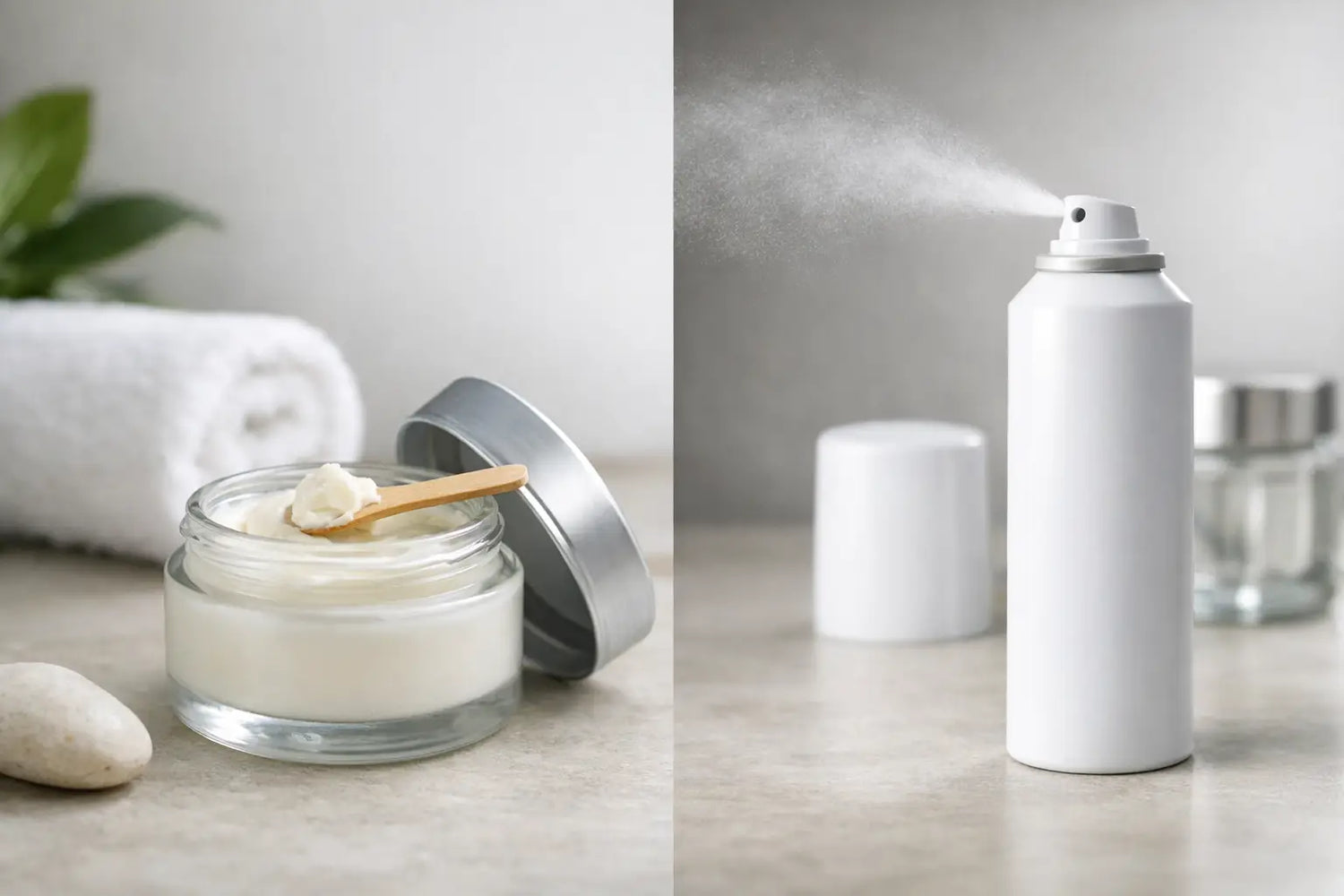
Cream deodorant versus spray deodorant: the key difference
Cream deodorant is applied directly with clean fingertips. It is usually concentrated, with a small pea-sized amount warmed between the fingers and massaged into each underarm. The texture can range from a soft balm to a light cream, often with botanical oils, butters, mineral powders and odour-neutralising ingredients.
Spray deodorant is misted onto dry underarms from a distance. Conventional aerosol sprays may use propellants, while non-aerosol natural sprays are typically water- or alcohol-based and delivered through a pump. They feel light, fast and familiar, particularly for people who prefer not to touch their underarms during application.
Both formats are designed to manage body odour. Deodorants do not necessarily stop perspiration in the way an antiperspirant does. Instead, they help address the bacteria that create odour when sweat meets the skin. This distinction matters if you want a product that works with your body’s natural cooling process while helping you feel fresh.
Why cream deodorant suits sensitive underarms
Underarm skin is delicate. It is also exposed to friction from clothing, regular shaving, heat, exercise and product residue. A well-formulated cream deodorant can feel especially supportive because it creates a soft, conditioning layer while delivering active odour protection where it is needed.
The application itself is part of the benefit. Taking a few seconds to massage in a cream helps you use just enough product and notice how your skin is feeling. If your underarms are dry, freshly shaved or prone to discomfort, this more considered approach can be kinder than repeatedly spraying a formula that contains high levels of alcohol or strong fragrance.
Creams are also often a practical choice for people looking for a lower-waste deodorant format. A concentrated jar can last well because the amount required is small. There is no airborne mist, no propellant and less risk of overspraying product onto clothing, tiles or the bathroom bench.
That said, texture matters. Some natural creams use bicarbonate of soda for strong odour control, and while many people love the performance, it can be too active for certain skin types. If you have experienced redness, itching or a rash with natural deodorants before, look for a sensitive-skin formula and introduce it gradually. Skin tolerance is personal, even with natural ingredients.
The cream deodorant experience
Cream deodorant is best for someone who values a skin-first ritual and does not mind using their hands. It can suit dry or sensitive underarms, frequent shavers and anyone wanting a rich but breathable feel. It is also ideal when maximum protection is the priority, as concentrated formulas can be very effective with minimal product.
The trade-off is time, although we are talking seconds rather than minutes. You need clean, dry fingertips, and you need to let the cream settle before dressing. If you are running out the door after a rushed gym shower, that small step may feel less convenient than a spray.
When spray deodorant makes more sense
Spray deodorant earns its place through speed and ease. A few spritzes on clean, dry underarms can feel cooling and weightless, which is particularly appealing in an Australian summer or after a workout. For those who dislike balmy textures, it offers a clean finish with no need to massage product into the skin.
It can also be useful for reapplication during the day. A compact non-aerosol spray is easy to keep in a gym bag, desk drawer or bathroom cabinet, and the hands-free application can feel more hygienic when you are out and about.
However, not every spray is equally gentle. Alcohol-heavy formulas can sting after shaving and may leave already dry skin feeling tight. Fragrance can be another consideration for reactive skin. A natural spray with thoughtfully chosen ingredients may be a better fit, but it still pays to check the label and patch test if sensitivity is a concern.
Sprays can be less targeted, too. It is easy to use more than necessary, and product can drift if you apply it in a small, poorly ventilated room. Hold the bottle at the recommended distance, allow the skin to dry fully and avoid spraying immediately after shaving if your underarms are prone to irritation.
The spray deodorant experience
A spray is a strong choice if you want an ultra-light feel, fast application and easy top-ups. It suits people who prefer a no-touch format or who find creams too rich in humid weather. It may also be a comfortable option for underarms that perspire heavily but do not react to the formula.
Its limitation is that a lighter application can sometimes mean a lighter sense of protection, especially through long active days. This depends on the formula, your body chemistry and how much you sweat. If you need dependable all-day odour control, do not assume a spray will perform the same as a concentrated cream simply because both are labelled deodorant.
Ingredients matter more than the format
The cream-versus-spray decision is useful, but the ingredient list often tells you more about how a deodorant will feel and perform. Look for formulas that are transparent about what they contain and why.
Natural deodorants commonly use ingredients that help absorb moisture, neutralise odour or support the skin barrier. Mineral powders may help keep underarms feeling dry, while plant oils and butters can soften skin in a cream. Essential oils can provide a fresh sensory experience, although sensitive skin may prefer lower-fragrance options.
It is also worth being realistic about the word “natural”. A natural product is not automatically irritation-free, and a conventional product is not automatically unsuitable. Your aim is to find a formula that respects your skin, aligns with your ingredient preferences and performs consistently in your real life - at work, on the school run, at Pilates or during a warm weekend outdoors.
How to choose the right deodorant for your routine
Start with your underarms, not trends. If your skin is dry, reactive or uncomfortable after shaving, a gentle cream may offer the cushioning and control you need. If you want something cool, quick and barely there, a spray may be the better everyday fit.
Then consider your schedule. A cream can be a grounding part of a morning wellness ritual, especially when you enjoy intentional body care. A spray can be more practical for shared bathrooms, post-training freshen-ups or mornings when every minute counts.
Your clothing matters as well. Give either format a moment to dry before putting on a fitted top, particularly dark fabrics. With cream deodorant, use less than you think you need and massage it in thoroughly. With a spray, apply to completely dry skin and avoid layering it excessively.
If you are switching from an antiperspirant to a natural deodorant, allow for an adjustment period. You may notice changes in wetness because deodorant does not block sweat glands. This is not a detox, and it does not mean you need to push through ongoing irritation. If discomfort persists, stop using the product and choose a gentler formulation.
A practical way to test both formats
If you are undecided, test one format at a time for at least a week in similar conditions. Apply it to clean, dry skin and pay attention to comfort, odour control, texture and how it holds up through movement and heat. Avoid changing several body-care products at once, as that makes it harder to identify what your skin responds to.
Black Chicken Remedies’ Axilla range is designed for people who want natural deodorant performance with a considered approach to sensitive underarms. Choosing a formula that feels good to use is not a minor detail - it is what helps a new ritual become one you will genuinely keep.
The best deodorant is the one you reach for without hesitation: effective enough for your busiest days, gentle enough for everyday skin and easy enough to make self-care feel like second nature.