











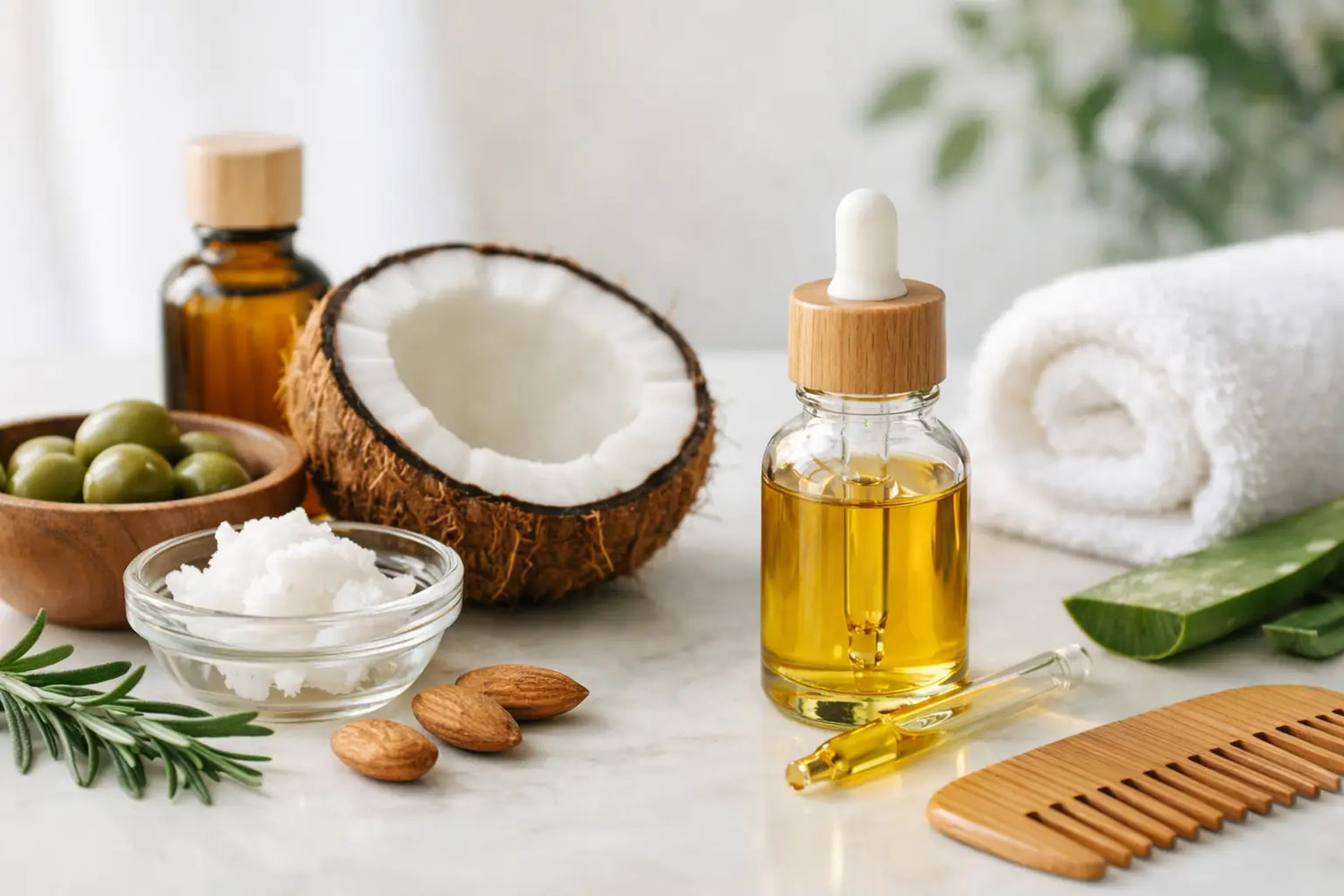
That tight, itchy feeling after washing your hair is usually your scalp asking for support, not stronger shampoo. The right natural scalp oil for dry scalp can help restore comfort, soften visible flakes and bring your scalp back into balance without coating your roots in heavy residue.
Dry scalp is often mistaken for dandruff, but they are not always the same thing. A dry scalp tends to feel tight, sensitive and rough, with smaller, drier flakes. Dandruff is more commonly linked to excess oil, yeast overgrowth and larger flakes. If you treat dryness with harsh anti-dandruff products, you can end up making your scalp feel even more stripped.
Why a natural scalp oil for dry scalp can work
Your scalp is skin, and like the skin on your face or body, it needs enough oil and water to stay resilient. When that balance is disrupted by weather, overwashing, hot tools, colouring, stress or harsh cleansers, the scalp barrier can become compromised. That is when itching, flaking and sensitivity tend to show up.
A well-formulated natural scalp oil helps in two ways. First, it replenishes lipids that support the scalp barrier. Second, it creates a softer, more comfortable surface so dry flakes loosen more gently instead of lifting in visible patches. The goal is not to drown the scalp in oil. It is to choose lightweight, nutrient-rich oils that nourish without clogging or leaving hair limp.
This is where ingredient quality matters. Natural oils rich in essential fatty acids, antioxidants and soothing plant compounds can help support skin function while still feeling breathable on the scalp. For sensitive skin, simpler formulas are often the smarter choice.
What to look for in a natural scalp oil for dry scalp
Not every oil belongs on every scalp. Some are beautifully nourishing but too rich for fine hair. Others absorb quickly but may not give enough comfort to a scalp that is very dry or reactive. The best option depends on your hair density, your washing routine and whether your scalp is simply dry or also irritated.
Jojoba oil is a strong place to start because it closely resembles the skin's natural sebum. It is lightweight, helps soften dry areas and suits many scalp types. Argan oil is another good choice when dryness is paired with dull lengths or frizz, as it nourishes both scalp and hair without feeling overly heavy.
Rosehip oil can be helpful if your scalp feels delicate or easily aggravated, thanks to its fatty acid profile and skin-conditioning properties. Coconut oil is more divisive. Some people love it for deep nourishment, especially on thick, coarse or curly hair, while others find it too heavy or difficult to rinse. If you are prone to build-up, it may not be the best first choice.
Essential oils can also play a role, but only when properly diluted. Lavender is often chosen for its calming feel on stressed skin. Tea tree can be useful when flaking overlaps with congestion or an oily scalp, though it can be too intense for very sensitive skin if the blend is not carefully balanced. Peppermint may feel refreshing, but a tingling scalp is not always a healthier scalp. Gentle usually wins.
Signs your scalp needs moisture, not a stronger treatment
If your scalp feels worse after shampooing, looks flaky mainly around the hairline or crown, and improves slightly when you skip a wash day, dryness may be the issue. Seasonal changes are another clue. Many people notice a dry scalp in winter, after long sun exposure, or when indoor heating and cooling are doing their usual damage.
Hair habits count too. Frequent heat styling, bleaching, colouring and strong cleansing can all disturb the scalp's natural balance. Even some products marketed as clarifying can leave the scalp feeling squeaky in a way that is closer to stripped than clean.
That is why scalp care works best as a ritual, not a rescue mission. A natural oil can be highly effective, but it performs best when the rest of your routine supports it.
How to use scalp oil without making hair greasy
The biggest concern with scalp oil is usually the same one: will it flatten my hair? It can, if you use too much or apply it like a hair mask. But when used correctly, scalp oil can be precise, lightweight and easy to work into your routine.
Start with a small amount on a dry scalp before washing. Part your hair in sections and apply a few drops directly onto the scalp, focusing on the driest areas rather than saturating the whole head. Then massage gently with your fingertips for a minute or two. This helps distribute the oil, boosts circulation and lifts dry flakes without scratching.
Leave it on for at least 20 minutes before shampooing. If your scalp is very dry, you can leave it longer, but overnight treatments are not always necessary. In some cases, they can increase build-up, especially if your hair is fine or your pillowcase absorbs part of the product rather than your scalp.
A double cleanse may help if you have applied a richer oil. Use a gentle shampoo and avoid very hot water, which can undo the soothing work you have just done. If your scalp is only mildly dry, once or twice a week is usually enough.
When oils help - and when they are not the whole answer
Natural oils can make a visible difference to dryness, sensitivity and flaky texture, but they are not a cure-all. If your scalp is persistently red, very inflamed, sore or producing thick yellowish flakes, you may be dealing with seborrhoeic dermatitis, psoriasis or another skin condition that needs targeted care.
Even when dryness is the main issue, your environment and habits still matter. A scalp oil will not do much if your shampoo is too harsh, your shower water is too hot and your styling routine is constantly dehydrating your skin. Think of oil as one part of a high-performance scalp routine, not the entire routine.
Hydration from within also plays a role, as does overall skin health. Stress, poor sleep and hormonal shifts can all show up in the scalp. That broader wellness lens is worth keeping in mind, especially if dryness keeps returning.
The best routine for a dry, sensitive scalp
A results-driven scalp routine does not need to be complicated. Keep cleansing gentle and regular rather than aggressive and infrequent. Use lukewarm water, choose products with fewer harsh detergents, and treat your scalp with the same care you would give sensitive facial skin.
If your lengths are dry as well, apply conditioner through the mid-lengths and ends without smothering the scalp. Heat styling should be dialled back when possible, and brushes or combs should never be used to scrape flakes off the scalp. That usually leads to more irritation, not less.
For many people, the sweet spot is a lightweight natural oil before wash day, paired with a calm, non-stripping shampoo and a more mindful styling routine. If your scalp is reactive, less is often more. The right formula should leave your scalp feeling comfortable and your hair still looking fresh.
A premium natural approach can be especially effective when performance and skin sensitivity are treated as equally important. That balance sits at the heart of modern wellness-led hair care, and it is why so many people are moving away from harsh, quick-fix formulas in favour of rituals that work with the body.
Choosing the right oil for your hair type
Fine hair usually responds best to lighter oils such as jojoba or a carefully balanced botanical blend used sparingly. Medium to thick hair can often tolerate richer nourishment, especially if the scalp is flaky and the ends are dry. Curly and coily textures may benefit from a slightly more generous pre-wash treatment because natural scalp oils take longer to travel down the hair shaft.
If you colour your hair, a natural scalp oil can also support comfort between salon visits, particularly when your scalp feels tender after processing. Just be sure the formula is gentle and avoid applying essential-oil-heavy blends to freshly treated skin.
And if you are trying a new product for the first time, patch testing is still the smart move. Natural does not automatically mean non-reactive.
A dry scalp rarely needs punishment. It needs support, consistency and the kind of ingredients that restore comfort without compromising performance. Choose your natural scalp oil with care, use it lightly and regularly, and give your scalp the same thoughtful attention you give the rest of your skin.