











Anxiety rarely arrives at a convenient time. It shows up in the car before a meeting, at 3 am when your mind starts racing, or halfway through a busy afternoon when your body feels like it is running faster than the day around you. That is where an essential oil inhaler for anxiety can earn its place - not as a cure-all, but as a simple, portable tool that helps create a moment of calm when you need it most.
For many people, the appeal is obvious. An inhaler is mess-free, easy to carry, and quick to use. You are not setting up a diffuser, applying oil to sensitive skin, or trying to build a complicated ritual in the middle of real life. You are taking a slow breath with a targeted blend and giving your nervous system a cue to soften.
Why an essential oil inhaler for anxiety feels effective
The real strength of inhalation is speed. When you breathe in an essential oil blend, the aroma is processed almost immediately, and scent has a direct relationship with the emotional centres of the brain. That does not mean every breath transforms your mood on command. It does mean scent can become a powerful pattern interrupt.
That matters if your anxiety tends to spiral. The first few minutes of feeling overwhelmed can set the tone for everything that follows. An inhaler offers a practical reset. The scent gives your brain something specific to focus on, while the act of breathing slowly through the inhaler helps shift you out of shallow, stress-driven breathing.
This is also why results vary from person to person. Anxiety is not one-size-fits-all, and neither is aromatherapy. Some people respond beautifully to floral oils. Others find them too rich and do better with resinous, herbaceous or citrus notes. The best inhaler is not always the strongest one. It is the one you will actually reach for, and the one your body associates with relief.
What oils are commonly used
Lavender is usually the first oil people think of, and for good reason. It has a familiar calming profile and tends to feel gentle rather than overpowering. Frankincense is another popular choice because it has a grounding quality that suits moments when your thoughts feel scattered. Sweet orange and bergamot can lift the mood while still feeling soft, which makes them useful when anxiety arrives with tension and flatness rather than panic.
Peppermint can be helpful for some people, especially if anxiety brings a foggy, head-heavy feeling. But it is not ideal for everyone. If your nervous system is already activated, very sharp minty oils can feel too stimulating. That is the trade-off with energising oils - they can clear the head, but they are not always the right fit for winding the body down.
A balanced blend often works better than a single note. Think calm rather than sleepy, clear rather than intense. A well-designed inhaler tends to feel rounded and easy to return to throughout the day.
Gentle choices for daytime calm
If you want support during work, commuting or parenting, look for blends with lavender, sweet orange, frankincense, mandarin or ylang ylang in small amounts. These oils can help take the edge off without making you feel heavy.
Better choices for evening wind-down
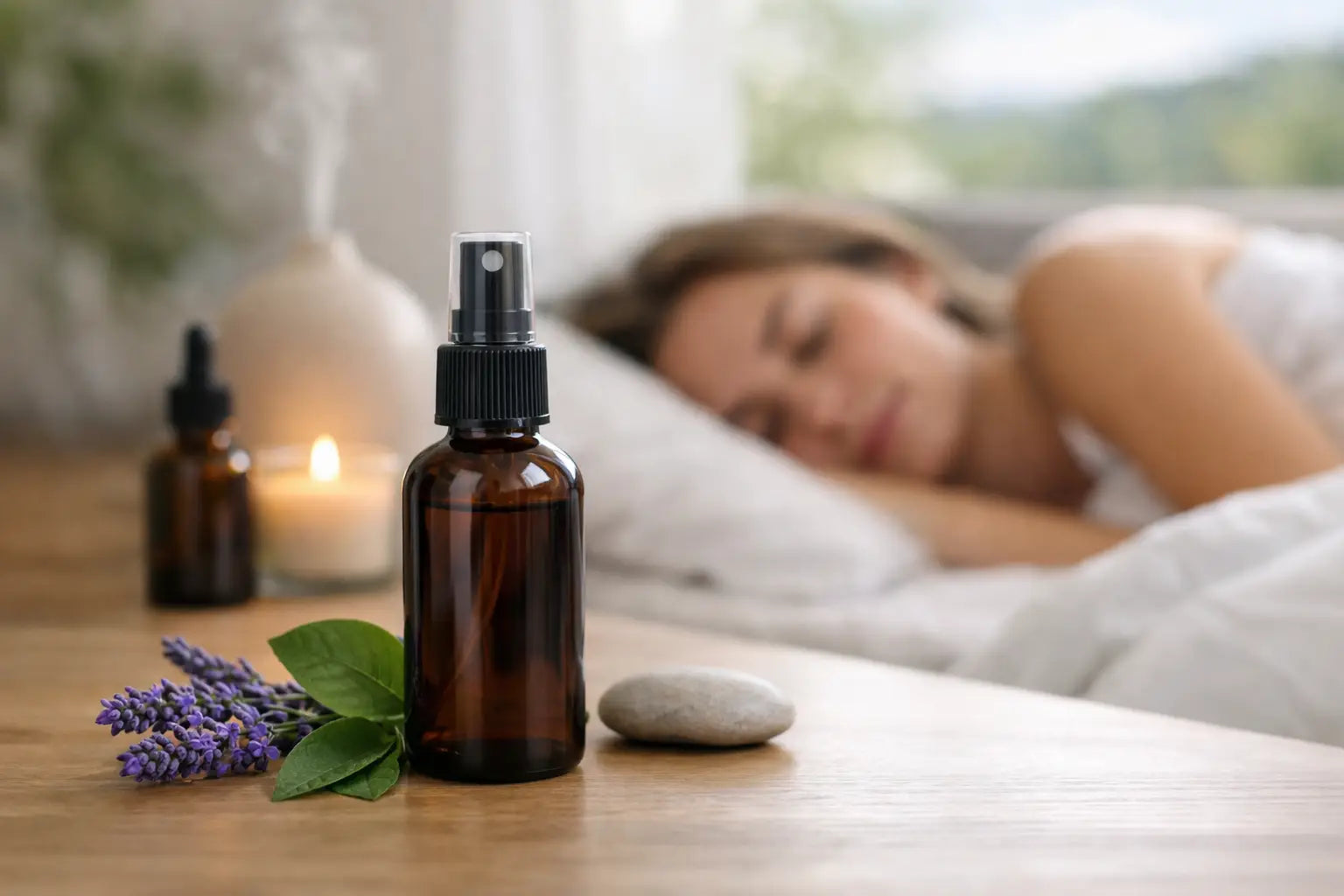
At night, deeper oils such as lavender, cedarwood, frankincense and Roman chamomile can feel more settling. If your anxiety tends to peak before bed, these profiles often pair well with a broader sleep ritual.
When to use an inhaler
The best time to use an inhaler is not only when you are already overwhelmed. It can be just as helpful in the lead-up to a stressful moment. If you know school pick-up, public speaking, flying, crowded places or bedtime tend to trigger anxious feelings, using your inhaler beforehand may help stop that stress response from building momentum.
It is also worth using it consistently enough that the ritual becomes familiar. The inhaler is doing more than delivering scent. It is training a response. When you repeatedly pair the same blend with slower breathing and a deliberate pause, your body begins to recognise that pattern. Over time, that can make the experience feel more effective.
Try not to think of it as something you should only reach for in a crisis. A few steady breaths before a difficult conversation, during a long workday, or after too much screen time can be just as valuable.
How to use an essential oil inhaler for anxiety properly
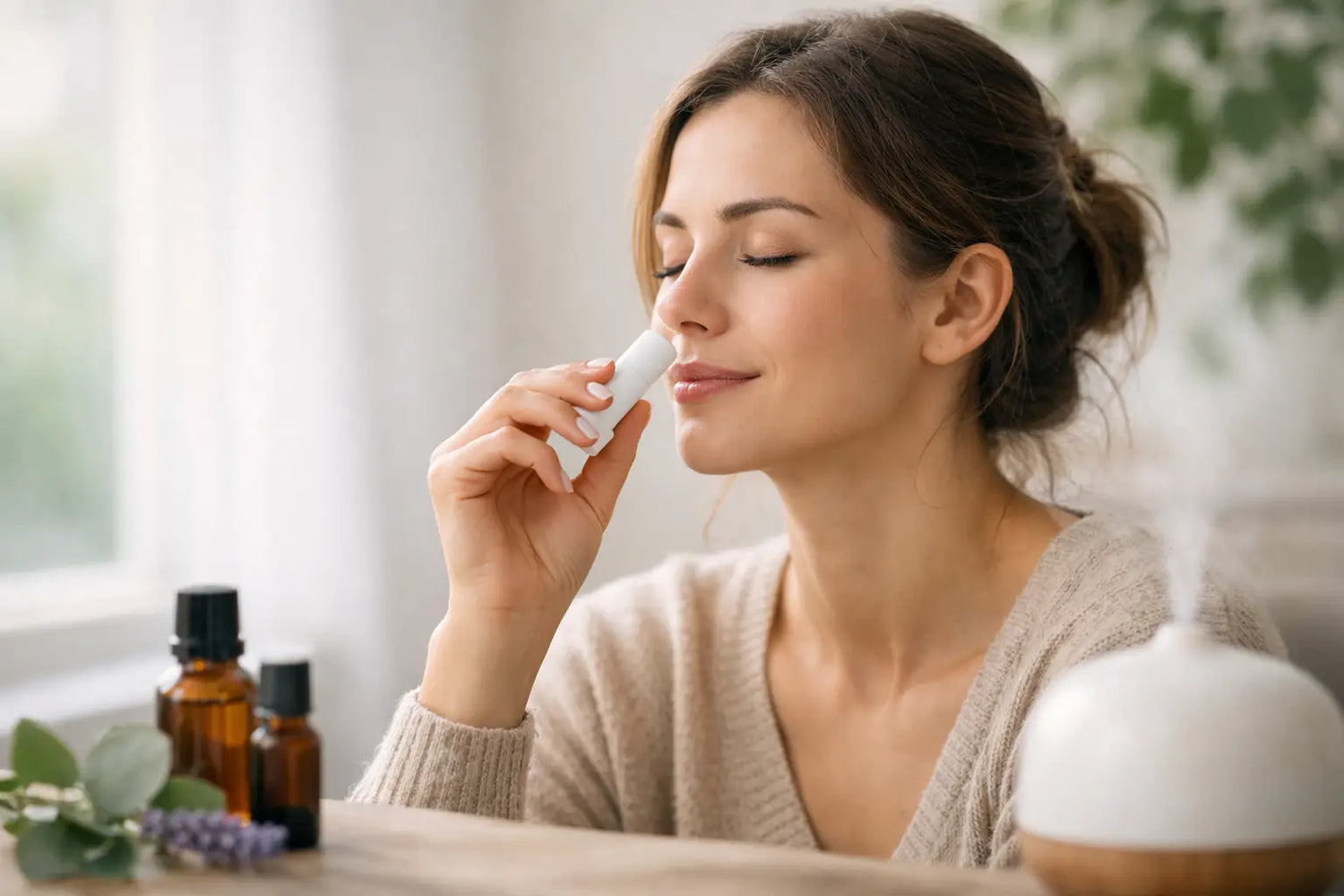
There is no need to overcomplicate it. Hold the inhaler just under one nostril, close the other if you like, and inhale gently. Then switch sides. A few slow breaths are usually enough. You are aiming for calm, controlled breathing - not the biggest breath possible.
If you are already feeling panicky, forcing deep breaths can sometimes make things worse. In that case, keep the inhale soft and focus on making the exhale a little longer. The inhaler gives you a sensory anchor. The breath gives your body the message that it is safe to slow down.
Use it for a minute or two, then put it away and notice what has shifted. Maybe your chest feels less tight. Maybe your thoughts are still busy but less sticky. Small changes count.
What an inhaler can and cannot do
This is where honesty matters. An inhaler can support a calmer state, but it is not a replacement for mental health care. If you live with ongoing anxiety, panic attacks or severe sleep disruption, aromatherapy works best as part of a broader approach that may include therapy, medical care, movement, sleep support and daily stress management.
That does not make it less valuable. In fact, practical tools are often what make healthy habits easier to maintain. An inhaler is portable, low-fuss and realistic. It fits into a handbag, glovebox, bedside drawer or desk. It can support the moments between appointments, the moments that tend to test you most.
It is also a useful option for people who want the benefits of essential oils without applying them directly to the skin. If you are sensitive, reactive or simply prefer a cleaner experience, inhalation can feel like a better match.
Choosing a quality inhaler
Not all essential oil products are created equally. If you are choosing an inhaler for anxiety support, look for clear ingredient information, a thoughtfully blended scent profile and a brand that prioritises quality over perfume-like intensity. Natural wellness products should feel effective and easy to trust.
A good inhaler should smell clean and distinct, not synthetic or headache-inducing. If the aroma feels too strong, that does not necessarily mean it is better. Often the most wearable blends are the ones with enough depth to feel calming without overwhelming your senses.
Packaging matters too. A sturdy inhaler is more likely to keep its aroma and survive life at the bottom of a bag. That sounds minor until you actually rely on it.
Making it part of a routine that works with your body
An inhaler works best when it supports, rather than replaces, the rest of your wellbeing routine. You might use it during your morning commute, before walking into the office, after closing your laptop, or while settling into bed. Pair it with a few slow breaths, lower lighting, a warm shower or a brief stretch and it becomes more than a product. It becomes a cue.
That is often the difference between buying something and actually benefiting from it. The product needs to fit your life. At Black Chicken Remedies, that idea sits at the heart of natural wellness - products should feel good to use, but they also need to perform in real-world moments.
If anxiety leaves you feeling scattered, start small. Choose one point in the day where you know your stress usually spikes and keep your inhaler close. Let it be the reminder to pause, breathe and reset before your body tips too far into overwhelm.
Some days it will feel immediately helpful. Other days the shift may be subtle. Both are valid. Calm is not always dramatic. Sometimes it is simply the moment you stop bracing, breathe a little deeper, and remember that support can be small, practical and still genuinely effective.