











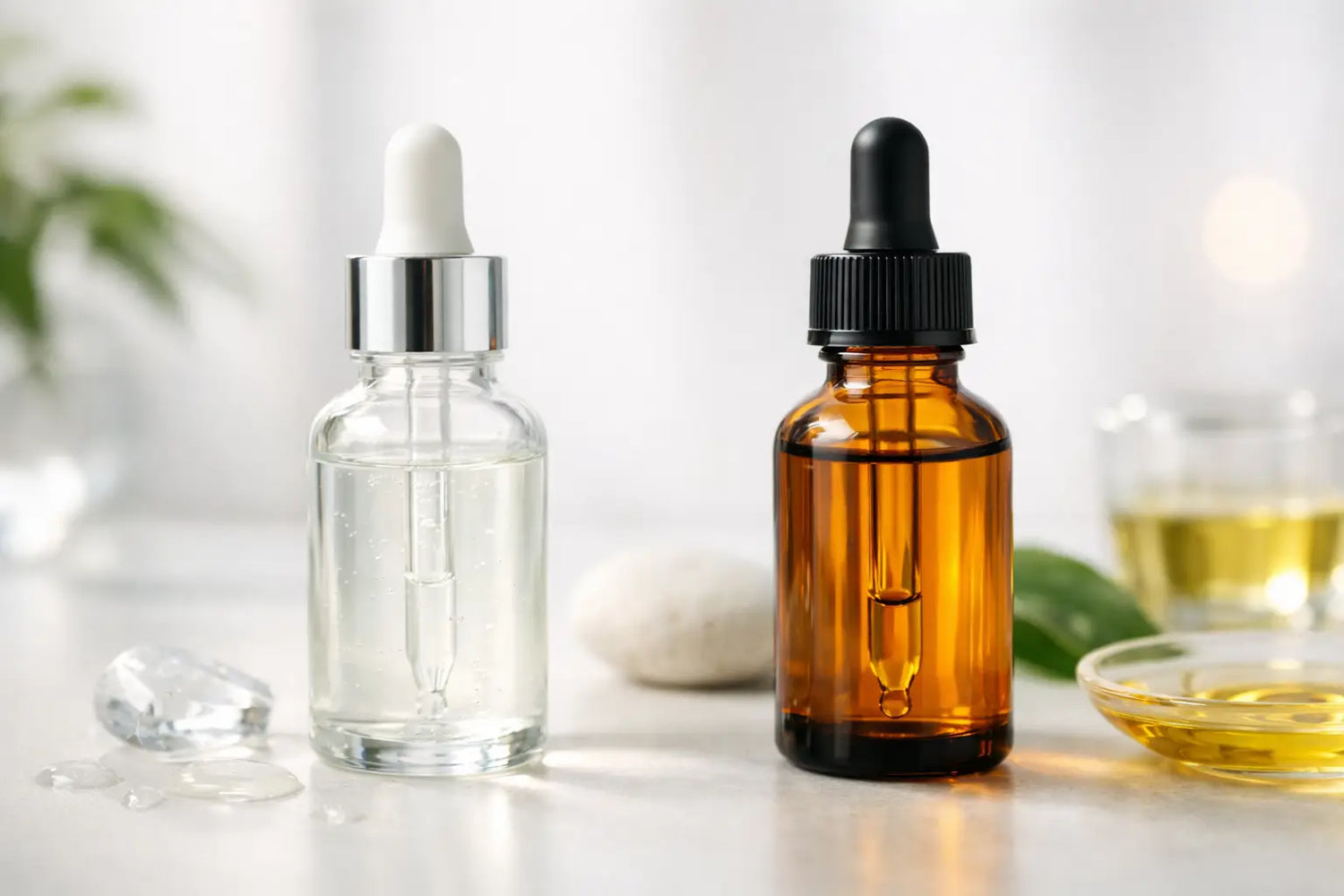
Your skin can feel tight after cleansing, then shiny by lunch, then suddenly flaky around the nose when the weather changes. That is exactly why the face serum vs face oil question is less about choosing a winner and more about giving your skin the right kind of support at the right time.
Both can earn a place in a high-performance natural skincare ritual. They simply work differently. A serum delivers concentrated, targeted ingredients in a light layer, while a face oil cushions the skin with nourishing lipids that soften, protect and help reduce moisture loss. Knowing the difference makes it easier to build a routine that feels good, performs well and respects sensitive skin.
Face serum vs face oil: the key difference
A face serum is typically lightweight and designed to address a particular skin concern. Depending on the formula, it may focus on hydration, dullness, uneven-looking texture, the appearance of fine lines or a compromised skin barrier. Serums often contain humectants, which draw water towards the skin, alongside botanical extracts and skin-supporting actives.
A face oil is rich in emollients, including plant oils that smooth roughness and improve the soft, supple feel of skin. It creates a comforting layer on the surface, helping to seal in the hydration applied underneath. Oils can also replenish the lipids that dry or over-cleansed skin may be missing.
The simplest way to remember it is this: a serum brings targeted treatment and water-based hydration; an oil brings nourishment and helps hold that hydration in place. They are complementary, not competing products.
When a serum is the better choice
Reach for a serum when your skin needs a focused boost without extra richness. If you have combination skin, are prone to congestion, prefer a barely-there daytime routine or want a product that sits comfortably beneath moisturiser and sunscreen, a light serum can be ideal.
Hydrating serums are especially useful when skin looks dehydrated rather than dry. Dehydrated skin lacks water and can still produce plenty of oil, which is why it may feel tight yet look shiny. A well-formulated serum can help restore a fresher, bouncier look without making your complexion feel coated.
Serums also suit mornings when you want your skincare to absorb quickly before getting on with the day. Apply a few drops to clean, slightly damp skin, then follow with moisturiser or face oil if your skin needs more comfort. Always finish your morning routine with broad-spectrum SPF.
The trade-off is that a serum may not be enough on its own for very dry, mature or weather-stressed skin. If your face still feels tight half an hour later, it is asking for a more protective layer.
Signs your skin may want a serum
Your skin may benefit from a serum if it feels dehydrated, looks lacklustre, becomes oily through the T-zone or needs support without a heavy finish. It can also be a smart first step when you are introducing a new active ingredient, as it lets you target one concern clearly and assess how your skin responds.
For sensitive skin, fewer ingredients and a calm, consistent routine usually work better than constantly changing products. Look for gentle, thoughtfully formulated options and introduce them one at a time.
When a face oil is the better choice
Face oil comes into its own when skin feels dry, rough, uncomfortable or vulnerable to the elements. Winter air, air conditioning, long flights, over-cleansing and exfoliating too often can all leave the skin barrier feeling depleted. A nourishing oil can make a visible difference to comfort and softness.
Plant oils vary in texture and fatty-acid profile, so the best choice depends on your skin. Lighter oils can suit combination skin, while richer blends may feel particularly supportive for dry or mature complexions. The goal is not to make skin greasy. It is to leave it balanced, flexible and cared for.
Use face oil at night when you have a little more time for a restorative ritual. Press two or three drops between your palms, then gently press into your face and neck. The warmth of your hands helps spread the product evenly without tugging at the skin.
Oil can also be useful in the morning, particularly during colder months, but quantity matters. Start small. You can always add another drop, whereas applying too much can make sunscreen or makeup feel as though it is sliding around.
Does face oil cause breakouts?
Not necessarily. Breakouts are influenced by many factors, including hormones, stress, skin condition and the overall formula of every product in your routine. Some people with oily or blemish-prone skin tolerate a light face oil beautifully, particularly when their skin has been stripped by harsh cleansing.
However, if an oil consistently leaves you congested, stop using it and simplify your routine. A richer texture is not automatically better. Skin that is prone to breakouts may prefer a light serum, a small amount of oil only at night, or oil pressed onto dry areas rather than the entire face.
Can you use serum and oil together?
Yes. Layering serum and oil is often the most effective approach when your skin needs both hydration and nourishment. The order matters because lighter, water-based products should generally go on before richer oils.
After cleansing, apply your serum to slightly damp skin. Give it a moment to settle, then apply your moisturiser if you use one. Finish with face oil to help lock in that hydration. At night, this can become a simple but deeply comforting ritual for dry, tired or sensitised skin.
You do not need every step every day. In humid weather, a serum and moisturiser may be plenty. On a cold, windy day or after a long shower, adding a face oil can provide the extra support your skin is asking for. Let your skin's comfort guide you rather than following a rigid routine.
How to choose for your skin type
There is no single rule because skin can change with seasons, stress levels, age and even the products you are using. Start with what your skin is doing now, not the label you have always given it.
For oily or combination skin, begin with a lightweight hydrating serum. If you want to try an oil, use one drop at night and observe your skin for a couple of weeks. For dry skin, pair a hydrating serum with a nourishing oil, especially in the evening. For sensitive skin, choose simple formulas, avoid over-exfoliating and patch test before applying a new product across your face.
If your skin is mature, both steps can be valuable. A serum can support hydration and targeted concerns, while an oil can help reduce the dry, papery feeling that makes fine lines look more noticeable. Consistency matters more than chasing a complicated ten-step routine.
A simple routine that works with your skin
A balanced routine does not need to be crowded. Cleanse gently, apply serum when you need targeted hydration or treatment, and use face oil when your skin needs nourishment and a protective finish. During the day, SPF remains essential, whether you use a serum, an oil or both.
Black Chicken Remedies approaches skincare as part of a wider wellness ritual: effective natural formulas, considered ingredients and products that feel supportive rather than harsh. That philosophy is useful when choosing any skincare product. Your routine should work with your skin, not demand that your skin works harder.
Pay attention to the small signals. If your skin feels calm, comfortable and balanced by the end of the day, you are on the right track. If it feels tight, shiny, irritated or congested, adjust one product at a time and give your skin room to settle.