










A natural deodorant can feel like a small change, until you realise how much your underarms notice the difference. Learning how to apply natural deodorant correctly helps you get the odour protection you expect while keeping sensitive underarms comfortable, balanced and cared for.
Unlike conventional antiperspirants, natural deodorants do not aim to block sweat. Sweat is one of the body’s normal cooling processes. Instead, a well-formulated natural deodorant works by helping to manage odour-causing bacteria and absorb excess moisture, so you can feel fresh without relying on aluminium salts or harsh synthetic ingredients.
How to apply natural deodorant correctly
The best application routine is simple: start with clean, dry skin, use a small amount, and give the product a moment to settle. The details matter, especially when you are changing from a conventional formula or managing easily irritated skin.
Begin with clean, completely dry underarms
Apply your deodorant after showering, once your underarms are fully dry. Water can dilute a cream formula, make a stick drag across the skin and prevent even coverage. If you have just exercised, rinse or wash away sweat first, then dry your underarms before reapplying.
There is no benefit in applying natural deodorant over yesterday’s product, perspiration or body oil. A fresh, clean base gives the formula the best chance to work with your skin.
Use less than you think
Natural deodorant is often concentrated, so more is not always better. For a cream or paste deodorant, start with an amount around the size of a small pea for each underarm. Warm it between clean fingertips for a few seconds, then massage it gently across the whole underarm area until it feels evenly distributed.
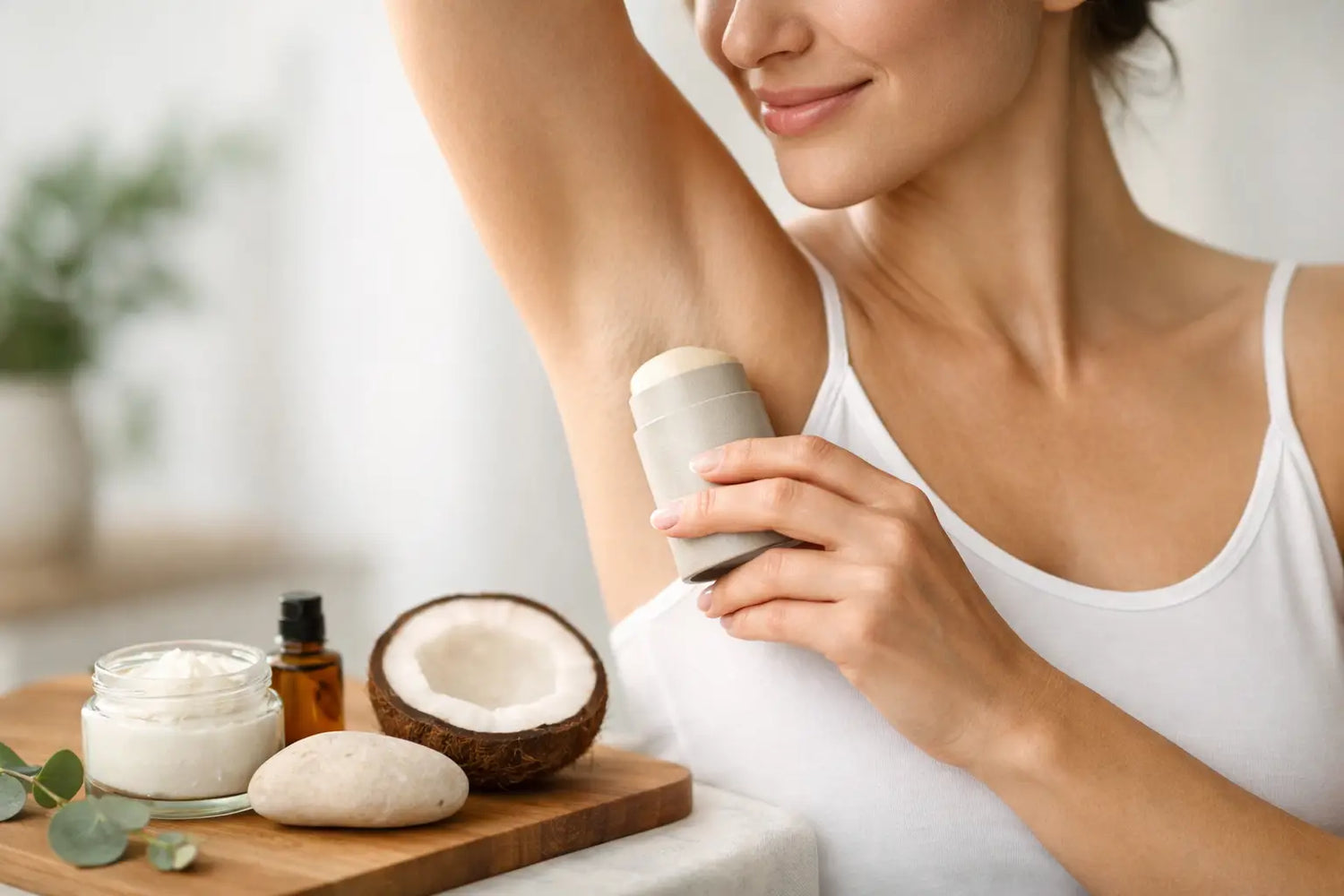
For a stick, two to three light swipes are usually enough. Pressing hard or repeatedly layering product can leave residue on clothing and may make skin feel coated. If your deodorant comes in a balm, use a small amount and take an extra moment to soften it between your fingers before applying.
The goal is a light, even layer over the skin where odour develops, not a thick coating. If you can feel excess product sitting on the surface, use a little less next time.
Let it settle before getting dressed
Give your deodorant a minute or two to absorb before putting on your top, particularly if you are wearing a fitted garment or dark fabric. This helps minimise transfer and allows the formula to sit comfortably against the skin.
If you are getting dressed in a rush, apply your deodorant before your skincare routine or while you are doing your hair. It is a small habit that can make the morning feel more considered, without adding another complicated step.
Apply with care after shaving
Freshly shaved underarms can be more reactive because shaving creates tiny, invisible disruptions in the skin barrier. If possible, shave in the evening and apply natural deodorant the following morning. If you need to shave before applying, allow the skin to calm first and use a minimal amount of product.
A brief tingle can happen on freshly shaved skin, particularly with formulas containing bicarbonate of soda or essential oils. Persistent stinging, redness, itching or a rash is not something to push through. Stop use, let your skin recover, and consider a sensitive-skin formula or a different application routine.
Give your underarms time to adjust
When you switch from an antiperspirant, your underarms may feel different for a short period. You might notice more dampness at first because antiperspirants reduce sweat, while natural deodorants allow your body to perspire as normal. That does not mean the deodorant is failing. Odour control and sweat reduction are two different jobs.
Some people settle into a natural deodorant routine straight away. Others need a couple of weeks to work out the right amount, reapplication schedule and formula for their skin. Hormonal changes, stress, medication, exercise, warm weather and fabric choice can all affect how much you sweat and how strongly body odour develops.
Avoid harsh underarm scrubs or so-called detox routines during this change. Underarm skin is delicate, and over-exfoliating can cause irritation that makes the transition more uncomfortable. Gentle cleansing, dry skin and a consistent application routine are usually all that is needed.
Choose the right time to reapply
Most people apply natural deodorant once in the morning and are set for the day. On very warm Australian summer days, after a gym session, or before an evening out, a light reapplication can be useful. Clean and dry your underarms first where possible rather than simply applying more over perspiration.
Reapplication depends on your day, not on a fixed rule. If you work in air conditioning and have a low-sweat routine, one application may be plenty. If you commute, train, run after little ones or spend time outdoors, packing your deodorant in your bag can offer welcome peace of mind.
Black Chicken Remedies Axilla deodorant is designed for effective daily odour protection while supporting a more comfortable natural deodorant ritual. As with any personal care product, the best result comes from matching the formula and amount to your skin’s needs.
Common natural deodorant mistakes to avoid
One of the most common mistakes is applying too much product. A generous layer will not necessarily provide stronger protection, but it can create build-up, transfer to clothing and leave underarms feeling less comfortable. Start small and adjust only if needed.
Another is expecting a natural deodorant to keep underarms completely dry. A deodorant supports freshness by managing odour. An antiperspirant uses active ingredients to reduce perspiration. If you expect identical dryness, the switch can feel disappointing even when your natural deodorant is doing exactly what it is designed to do.
It also helps to pay attention to your clothing. Breathable natural fibres can feel more comfortable on hot days, while close-fitting synthetic fabrics may hold onto odour more easily. If a favourite activewear top smells fresh out of the wash but develops odour quickly when worn, the fabric may be holding bacteria rather than your deodorant letting you down.
Finally, do not ignore irritation. Natural does not automatically mean suitable for every person or every day. Skin can react to bicarbonate of soda, fragrance, essential oils or even friction from shaving. Choosing a formula developed for sensitive underarms and using a smaller amount can make a meaningful difference.
Can you apply natural deodorant at night?
You can, but it is not essential. Many people prefer morning application because it fits naturally after showering and before getting dressed. Applying at night can suit you if you shower in the evening or want to wake up feeling prepared, provided your underarms are clean and dry.
If you apply at night and shower again in the morning, reapply afterwards. Cleansing removes the product, so a fresh layer is needed for daytime odour protection.
What if natural deodorant stops working?
Before changing products, review the basics. Check that you are applying it to clean, dry skin and using enough to cover the whole underarm, without overapplying. Consider recent changes in weather, stress, exercise, diet, medication or hormones, as these can influence perspiration and body odour.
If performance has changed with no obvious reason, wash workout gear and bras thoroughly, as trapped odour in fabric can return as garments warm against the body. You may also need a formula with a different base or one better suited to sensitive skin. A natural deodorant routine should feel supportive, not like a daily experiment in discomfort.
Your underarms do not need perfection. They need a considered routine, a formula that feels good on your skin and the confidence to move through your day feeling fresh. Start with a small amount, stay consistent, and let your natural deodorant become one of those quiet wellness rituals that simply works.