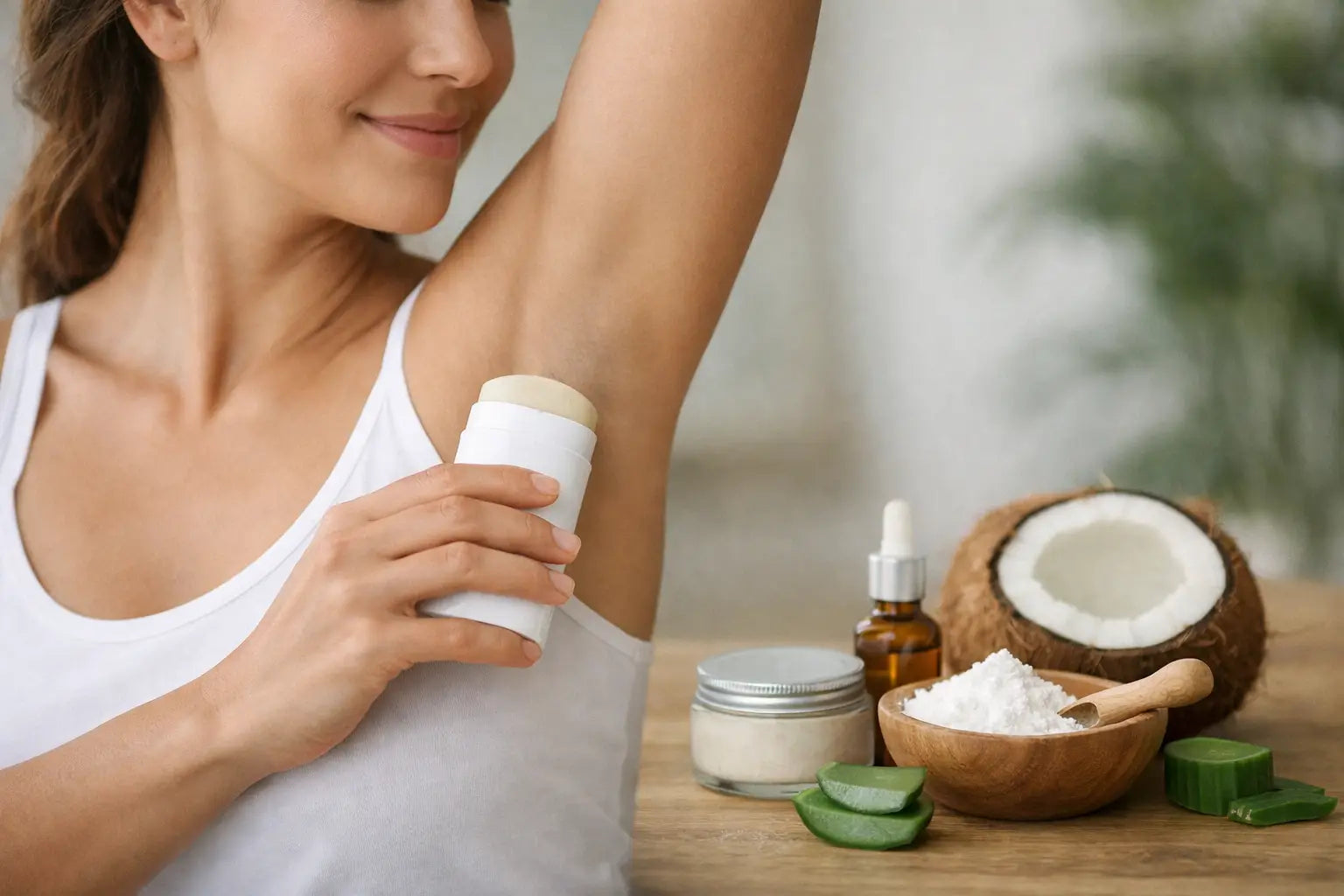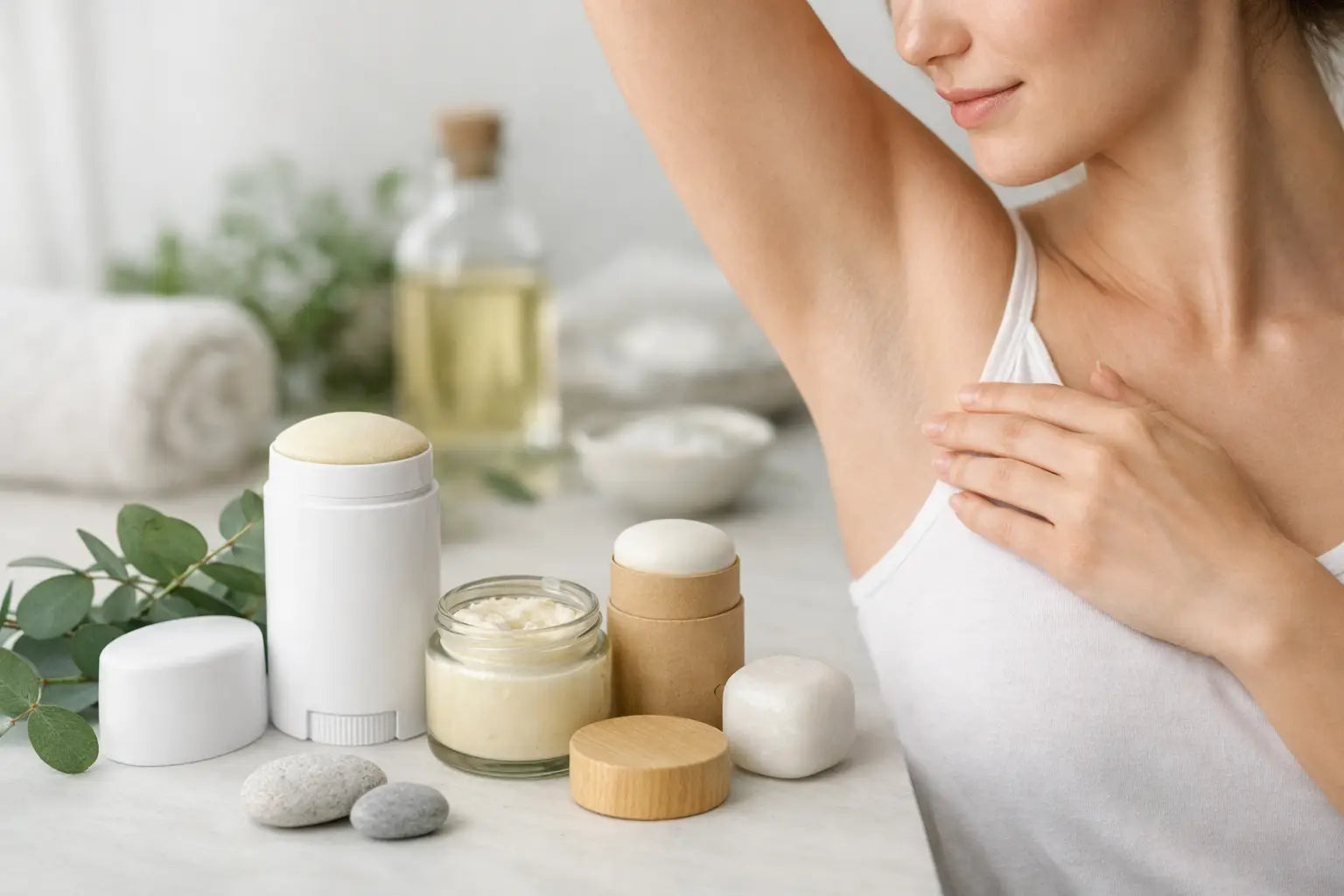











That sharp sting when you lift your arms, pull on a T-shirt or apply deodorant is your underarm skin asking for a pause. Knowing how to soothe irritated underarms starts with reducing friction and stripping ingredients, then rebuilding a simple routine that supports your skin barrier. You do not need to push through the discomfort to feel fresh.
Underarms are warm, high-friction areas with delicate skin, hair follicles and sweat glands all working hard. Shaving, exercise, heat, fragranced products and a new deodorant can all tip this small area into irritation. The answer is rarely to add more product. It is to give skin a calmer environment, then introduce effective protection thoughtfully.
First, identify what may be irritating your underarms
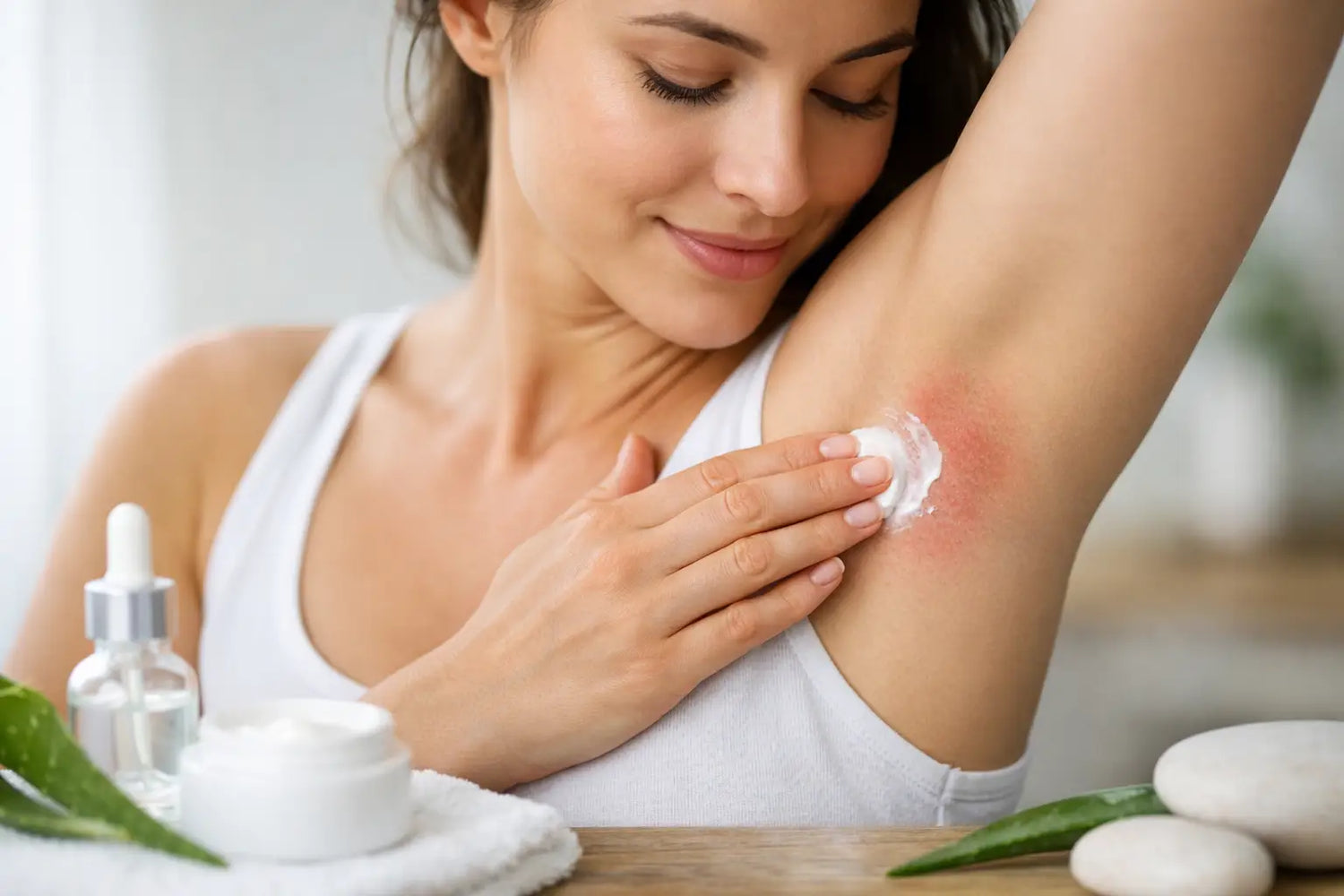
Irritation can look different from person to person. You may notice redness, tiny bumps, itchiness, dry or flaky patches, tenderness, darkened skin after inflammation, or a burning sensation when applying deodorant. The timing often offers the clearest clue.
If the sting began straight after shaving, razor friction or applying deodorant to freshly shaved skin may be the issue. If it appeared after switching products, your skin may be reacting to fragrance, essential oils, alcohol, bicarbonate of soda, acids or another ingredient. A rash that worsens in hot weather may be aggravated by sweat, tight activewear and rubbing.
Sometimes, it is a combination. A close shave can create microscopic nicks, then sweat and a high-active deodorant can make compromised skin feel even more sensitive. This does not mean natural deodorant cannot work for you. It means your formula and application routine need to suit your skin right now.
How to soothe irritated underarms with a skin reset
For a few days, keep your underarm routine intentionally minimal. Wash gently in lukewarm water with a mild, fragrance-free cleanser, then pat dry rather than rubbing with a towel. Avoid exfoliating scrubs, body brushes and strong soaps while the area feels sore.
Skip deodorant temporarily if applying it causes burning or intensifies redness. Sweat may feel inconvenient, but forcing product onto inflamed skin can prolong the problem. Wear loose, breathable cotton or soft natural fibres where possible, particularly overnight and after exercise, to reduce heat and friction.
A cool compress can bring welcome relief if your skin feels hot or itchy. Use a clean, soft cloth dampened with cool water for a few minutes at a time. Follow with a small amount of a plain, fragrance-free moisturiser designed to support the skin barrier. Keep the formula simple: this is not the moment for a heavily scented body butter or a multi-active treatment.
Avoid shaving until the skin has settled. If you need to remove hair, trimming may be gentler than shaving close to the skin. Once the irritation is gone, shave after a warm shower using a clean, sharp razor and a gentle shaving product. Rinse thoroughly and give your underarms time to dry before applying deodorant.
Choose deodorant with sensitive underarms in mind
When your skin feels comfortable again, the right deodorant can help you return to your normal routine without the familiar sting. Look beyond broad claims such as “natural” or “clean”. Natural ingredients can still be active, and every underarm has its own tolerance level.
Bicarbonate of soda is effective for many people because it helps manage odour, but it can be too alkaline for some sensitive underarms. If you have had recurring redness or rash from deodorant, a bicarbonate-free formula may be a more comfortable option. A cream, balm or roll-on texture can also feel different on the skin, so it may take a little trial and observation to find your best match.
Prioritise formulas made for sensitive skin, with clear ingredient information and an approach that focuses on odour protection without unnecessarily overloading delicate skin. Black Chicken Remedies’ Axilla range includes options designed to offer high-performance daily protection while giving sensitive underarms a more considered choice.
The amount you use matters too. More deodorant does not automatically mean more protection. Apply a light, even layer to clean, completely dry skin. If you are trialling a new formula, begin every second day or use a small amount first. This gives your skin time to adjust and makes it easier to notice whether the product is working well for you.
Give new products a proper patch test
A patch test is especially useful if you know your skin can be reactive. Apply a tiny amount of the new product to a small patch of inner arm skin and wait 24 to 48 hours. If there is no reaction, try it on one underarm before applying it to both.
This is not foolproof, because underarms are warmer and more prone to friction than your arm. Still, it is a practical way to reduce the chance of a full flare-up. If you experience persistent burning, itching or a visible rash, wash the product off and stop using it.
Small habits that make a real difference
Underarm irritation is often less about one “bad” product and more about accumulated stress on the skin. A few practical adjustments can make your everyday ritual much more comfortable.
Do not apply deodorant straight after shaving if your skin is prone to stinging. Give it several hours, or shave at night and apply deodorant the next morning. Change out of sweaty gym clothes soon after training, and wash bras, tops and activewear thoroughly, as residue from detergent, fabric softener or sweat can also bother reactive skin.
If you use exfoliating acids or retinoids on your body, keep them away from your underarms unless the product specifically says it is suitable for that area. Underarm skin generally does not need aggressive exfoliation to stay fresh. Gentle cleansing, dry skin and a deodorant that agrees with you are usually a stronger foundation.
It can also help to simplify your scent routine. Perfumed body wash, shaving gel, deodorant and body moisturiser layered together may be too much for already sensitive skin. Choose one product with fragrance if you enjoy it, and keep the rest of the routine gentle.
When irritation needs professional advice
Most mild irritation improves when you remove the trigger and let the skin recover. However, a painful lump, spreading rash, broken skin, pus, fever, severe swelling or symptoms that do not improve after a week deserve advice from a pharmacist, GP or dermatologist. These signs can point to something other than simple product irritation, such as an infection, folliculitis, eczema or contact dermatitis.
Seek help sooner if the rash repeatedly returns, even after you simplify your routine. A clinician can help identify potential triggers and advise on treatment that is appropriate for your skin. You should not have to accept ongoing discomfort as part of wearing deodorant.
Your underarms do a lot each day, from regulating temperature to carrying you through commutes, workouts and busy summer afternoons. Treating them with the same care you give the skin on your face can turn a daily irritation into a calmer, more comfortable ritual.