










You can usually tell within a few days whether a natural deodorant is going to work for you. Not just on odour, but on comfort. If your underarms feel calm, dry enough, and balanced by the end of the day, the formula is doing its job. That is why a natural deodorant ingredients guide matters - because performance starts with understanding what each ingredient is actually there to do.
Natural deodorant is often talked about as one big category, but formulas can behave very differently on skin. Some are designed for maximum protection. Some prioritise sensitive underarms. Some aim for a creamier texture, a drier finish, or a lower essential oil load. Once you know how the ingredient list works, choosing the right product becomes much easier.
How natural deodorant works
A deodorant is not the same as an antiperspirant. Antiperspirants are designed to block sweat, usually with aluminium salts. Natural deodorants work differently. They target odour by helping reduce bacteria on the skin, absorb moisture, and support a healthier underarm environment without trying to shut the body down.
That distinction matters. Sweating is a normal body function. Odour happens when sweat interacts with bacteria on the skin, which means a good natural deodorant formula focuses on managing that process. The best ones do this while still respecting the skin barrier, especially if your underarms are reactive after shaving, waxing, exercise, or daily friction.
Natural deodorant ingredients guide: what each type does
When you read an ingredient list, it helps to think in categories rather than chasing one hero ingredient. High-performing natural deodorants usually combine several functions in one formula.
Absorbent ingredients
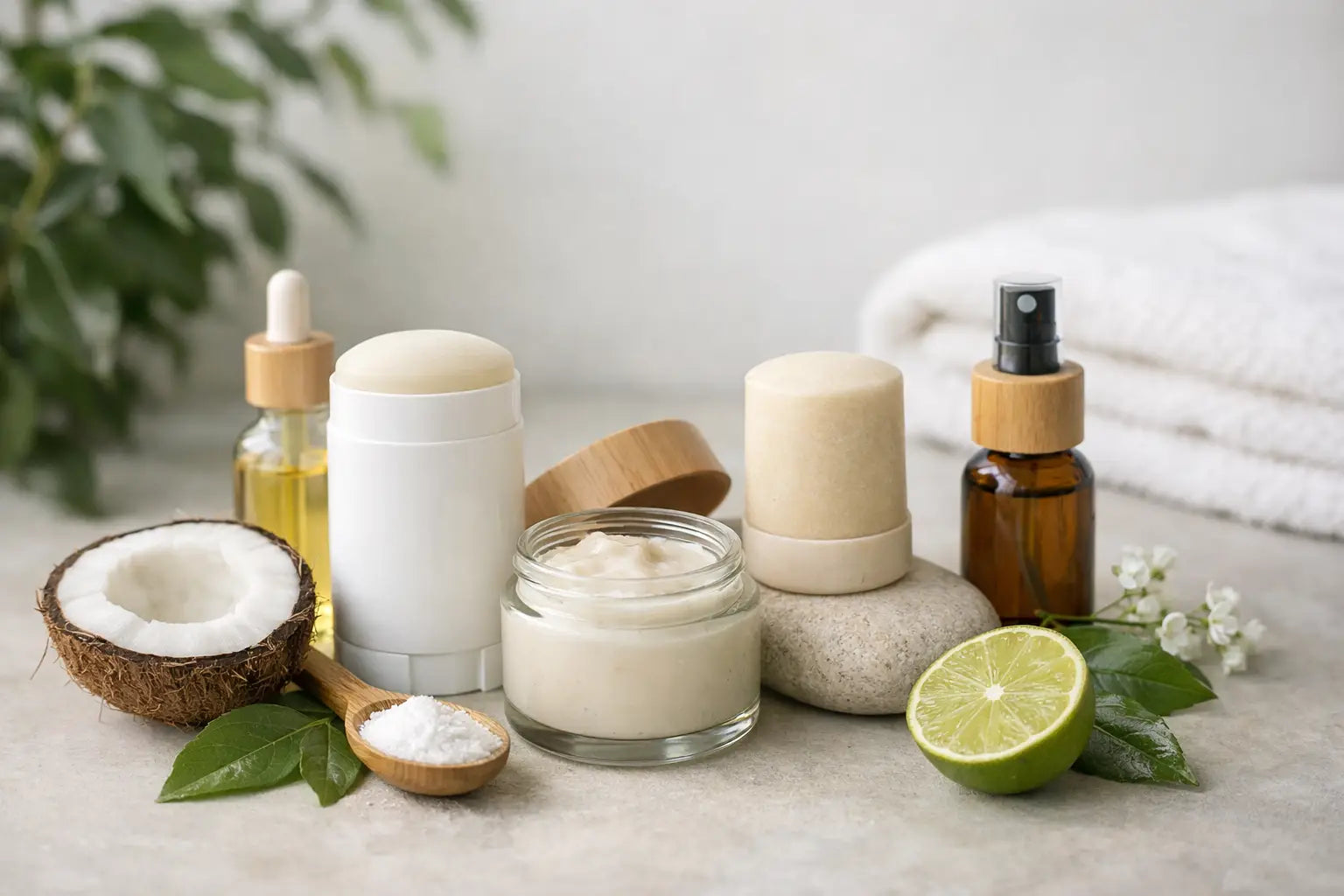
Absorbent powders help take up excess moisture so underarms feel drier and fresher through the day. Common examples include arrowroot powder, tapioca starch and kaolin clay. These ingredients do not stop perspiration, but they can make a significant difference to comfort.
Arrowroot is popular because it gives a soft, silky feel and helps reduce dampness without being overly heavy. Kaolin clay can add a cleaner, drier finish and is often well suited to oily or humid conditions. Tapioca starch tends to feel lightweight and smooth. The trade-off is that powders need to be balanced well. Too much can feel chalky or drag on skin.
Odour-neutralising ingredients
This is where much of the deodorant performance comes from. Sodium bicarbonate, magnesium hydroxide and zinc compounds are often used to help neutralise odour and shift the underarm environment so odour-causing bacteria are less of an issue.
Bicarbonate of soda is effective for many people, particularly if strong odour control is the priority. But it is not for everyone. In higher amounts, it can be irritating on sensitive underarms, especially after hair removal or if your skin barrier is already compromised.
Magnesium hydroxide has become a favourite in sensitive-skin formulas because it can help manage odour with a gentler skin feel. Zinc ricinoleate is another ingredient worth recognising. Rather than simply masking smell, it is used to trap and absorb odour molecules, which can make a formula feel more refined and more effective over longer wear.
Skin-conditioning oils and butters
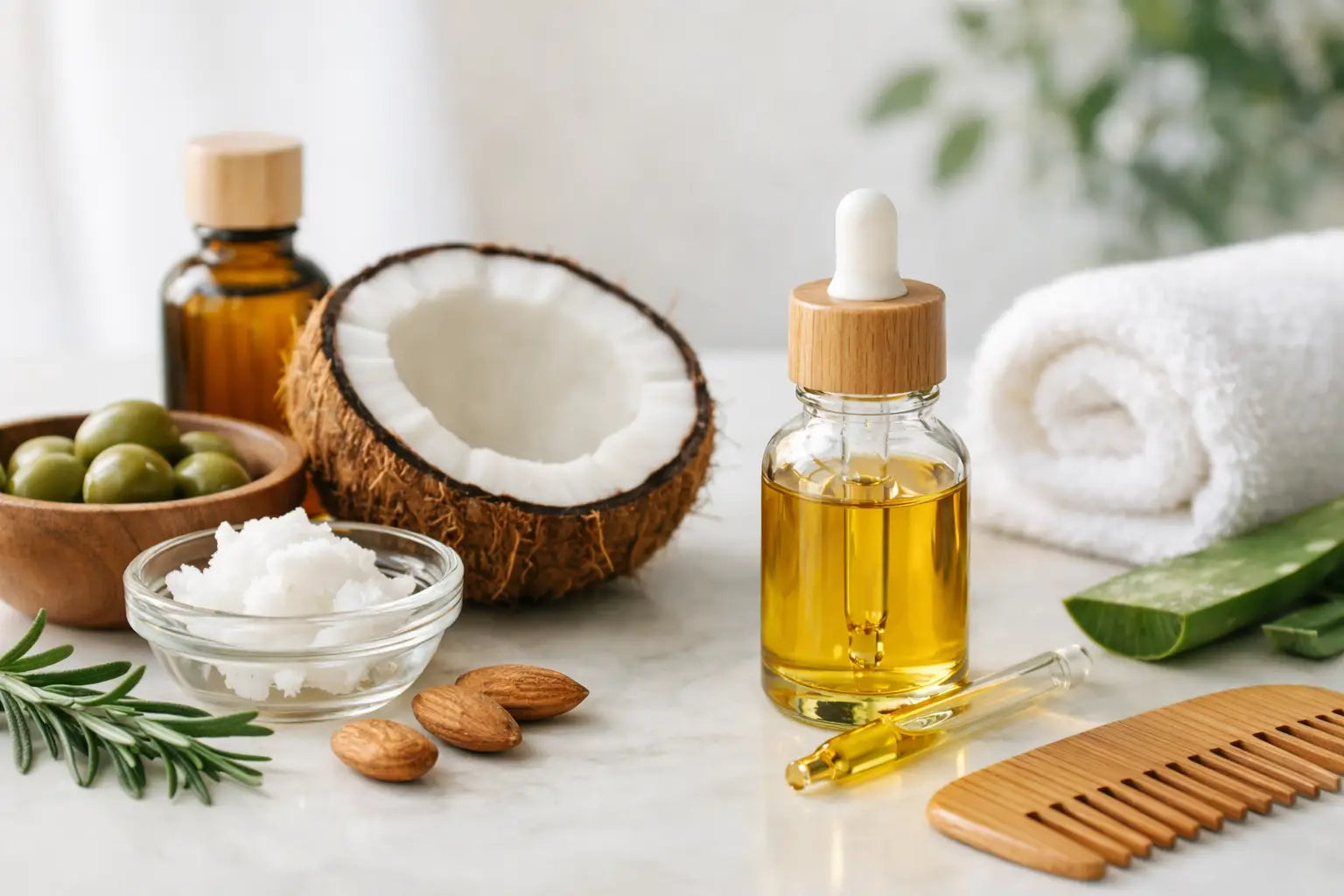
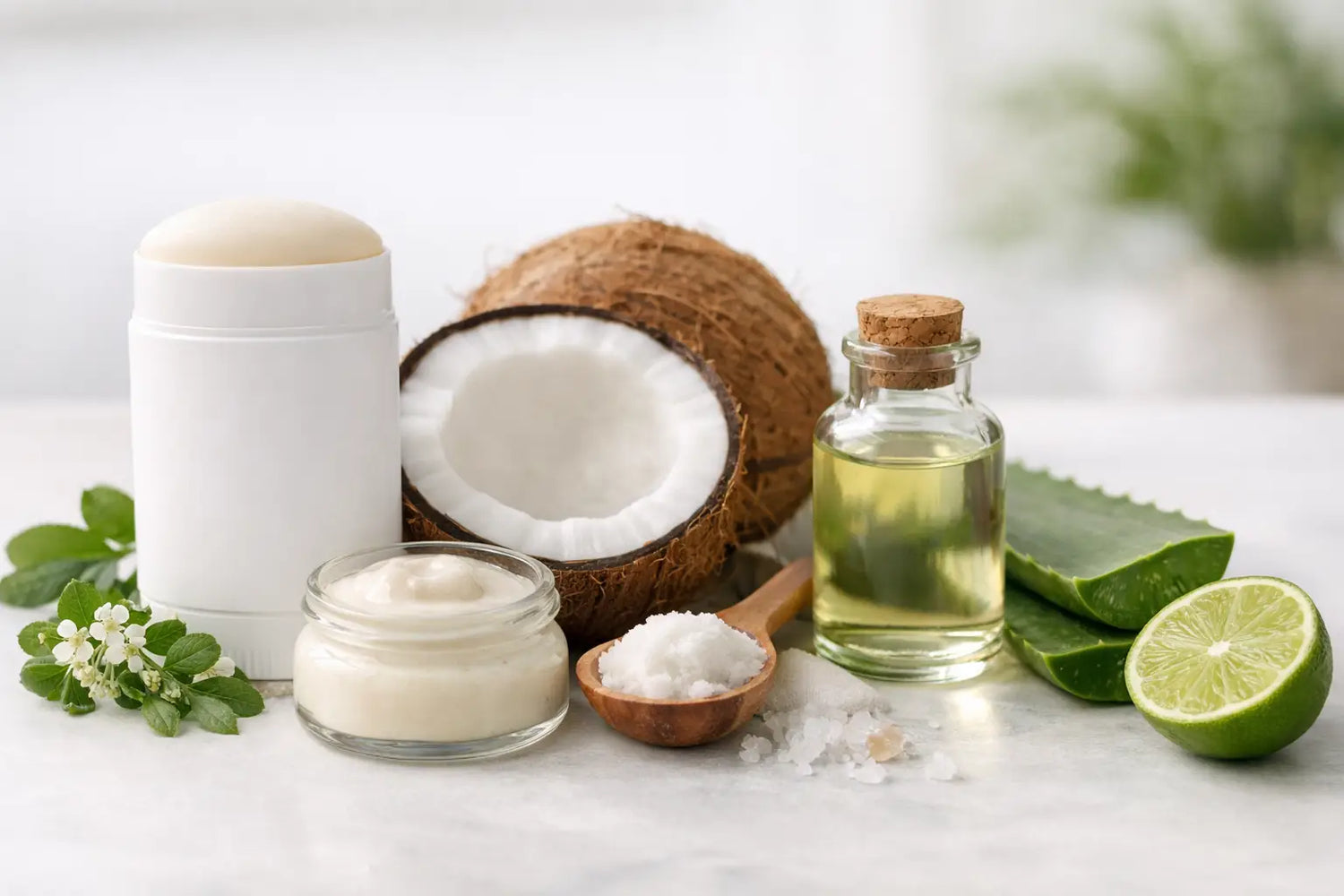
Natural deodorant should not just work hard. It should also feel good on skin. Coconut oil, shea butter, cacao butter and jojoba oil are commonly used to create glide, nourish the underarm area and reduce the risk of dryness.
Coconut oil is often included because it brings both emollient properties and mild antimicrobial support. Shea butter helps soften skin and improves comfort, especially in stick or paste textures. Jojoba oil is valued for its lightweight, skin-friendly profile. A well-balanced base matters because underarms are delicate. A formula can have excellent odour control, but if it leaves skin tight, itchy or greasy, most people will not stick with it.
Waxes and texture builders
Beeswax, candelilla wax and carnauba wax are used to give structure and help a deodorant hold its shape. They also influence how the product applies. More wax can mean a firmer stick and a more protective feel. Less wax can create a softer, creamier texture.
Texture is not just a cosmetic detail. It affects how evenly the product spreads, how much you use, and whether it feels comfortable in cooler or warmer weather. In an Australian climate, where heat can change how a product behaves in your bathroom or gym bag, this becomes especially relevant.
Essential oils and botanical extracts
Essential oils are often included for fragrance, freshness and, in some cases, their purifying properties. Tea tree, lavender, eucalyptus, lemon myrtle and peppermint are all common in natural body care.
They can elevate the sensory experience, but this is one area where more is not always better. If you have sensitive underarms, a heavily fragranced formula may not be your best match, even if the scent is beautiful. Botanical extracts can also support the skin, but they still need to be used thoughtfully. Gentle, effective formulas tend to respect that underarm skin is easily overwhelmed.
Ingredients that suit sensitive underarms
If your skin reacts easily, the goal is not to avoid every active ingredient. It is to choose a formula that balances performance with skin comfort. In a natural deodorant ingredients guide, the most useful question is often not what is strongest, but what is strongest while still being wearable for you.
Magnesium-based formulas are often a smart place to start. Creamy bases with nourishing oils and butters can also help, particularly if shaving leaves your skin tender. Lower-fragrance options may reduce the risk of stinging, and a smoother texture with finely milled powders can feel gentler than anything too dry or gritty.
It also helps to watch how your skin responds over time. Redness, burning or persistent itchiness is usually a sign that something in the formula is not the right fit. That does not mean natural deodorant is not for you. It usually means a different ingredient balance is needed.
What to avoid if you are reactive
There is no single ingredient that everyone should avoid, but there are common triggers. For some people, sodium bicarbonate is the main issue. For others, it is essential oils, fragrance blends, or even too much friction from a dry stick.
Alcohol-heavy formulas can also be problematic on freshly shaved skin. Strong acids may suit some users but feel too active for others. This is where patch testing helps. Underarms are not the place to assume your face or body tolerances will be the same.
A good rule is to be wary of formulas that promise everything at once - extreme dryness, intense fragrance, and very strong actives - if your skin is already telling you it prefers a calmer approach.
How to read a deodorant label with confidence
Ingredient lists can look technical, but they are easier to interpret once you know the pattern. The first few ingredients usually make up the bulk of the formula, so start there. Ask yourself three things: what absorbs moisture, what tackles odour, and what protects the skin.
If the formula relies heavily on powders and odour-neutralisers with very little skin-conditioning support, it may feel dry. If it is rich in oils and butters but light on absorbent ingredients, it may feel nourishing but less effective in hot weather or during exercise. Balance is usually what separates a natural deodorant that sounds good from one you actually want to use every day.
Packaging can offer clues too. A paste in a jar often allows for richer, more adaptable formulas. A stick may feel more convenient and travel-friendly. Neither is automatically better. It depends on your routine, your climate, and how sensitive your skin tends to be.
Choosing the right formula for your lifestyle
If you want everyday freshness for office days and errands, a balanced formula with moderate absorbency and skin-conditioning ingredients may be ideal. If you run hot, train often, or live somewhere humid, you may want stronger moisture absorption and more serious odour control. If your underarms are easily irritated, comfort should lead the decision.
This is where a premium natural formula earns its place. The best products are not simply aluminium-free. They are designed to perform in real life - on busy mornings, after workouts, through summer, and on skin that does not want to be punished in the process.
Black Chicken Remedies has built a loyal following around this exact challenge: creating natural deodorants that feel considered, high-performing and genuinely suitable for sensitive underarms. That balance is what many people are searching for, and it nearly always comes back to the ingredient list.
A natural deodorant ingredients guide is really about fit
The most effective natural deodorant for you may not be the one with the longest ingredient list or the loudest claims. It will be the one with the right combination of absorbency, odour control and skin support for your body.
Once you understand what ingredients are doing the heavy lifting, the category becomes far less confusing. You can shop with more confidence, switch formulas more intelligently, and build a daily ritual that works with your body - not against it. Your underarms will usually tell you when you have found the right one.