











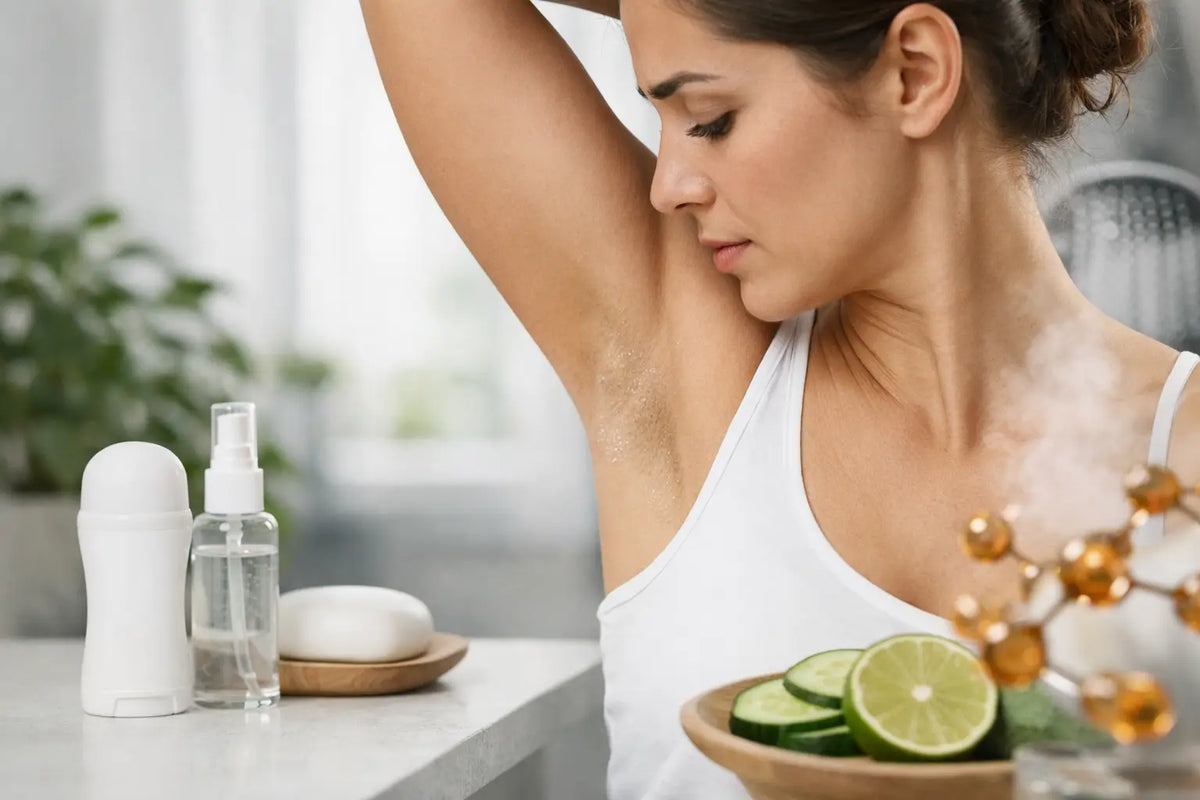
A clean shirt, a warm commute and a busy day can be enough to make you question your deodorant. But underarm odour causes are rarely as simple as “sweating too much”. Sweat itself has very little smell. The familiar scent develops when it meets the bacteria naturally living on your skin, and the balance can shift with stress, hormones, fabric, diet and the products you use.
Understanding what is happening under your arms can make choosing a deodorant - and caring for sensitive underarms - feel far less frustrating. The goal is not to stop your body doing its job. It is to support skin that feels comfortable, balanced and confidently fresh.
What actually causes underarm odour?
Your underarms have two main types of sweat glands. Eccrine glands produce a mostly water-based sweat that helps cool you down. Apocrine glands, concentrated around the underarms and groin, release a thicker fluid containing proteins and lipids.
When skin bacteria break down the compounds in apocrine sweat, they create odour. This is why you may smell stronger after a stressful meeting, a gym session or a humid summer afternoon, even when you have not visibly sweated much. It is also why fresh underarms are about more than simply masking scent with fragrance.
Everyone has a distinct skin microbiome, meaning the mix of microorganisms on their body. Your natural scent, sweat levels and skin sensitivity are personal. What works brilliantly for one person may feel irritating or ineffective for another.
Sweat is not the enemy
Sweating regulates body temperature and is a normal, healthy body function. Antiperspirants work by reducing the amount of sweat released, while deodorants focus on managing odour. A natural deodorant can help create less favourable conditions for odour-causing bacteria while absorbing moisture and keeping skin feeling comfortable.
For many people, the trade-off is worth considering. If you want underarm freshness without attempting to block perspiration, a well-formulated natural deodorant can be a practical daily choice. On very hot days, during intense exercise or when wearing close-fitting synthetic clothing, you may still notice dampness. That does not mean the product is not working against odour.
Common underarm odour causes that can change day to day
Heat, exercise and humidity
More heat generally means more sweat. Australian summers, packed public transport, long beach walks and workouts can all increase moisture under the arms. Moist skin gives bacteria a more welcoming environment, particularly when sweat sits against the body for hours.
Breathable fabrics such as cotton, linen and merino can help when practical. Changing out of damp activewear soon after training also matters. Synthetic fabrics are excellent for some sports, but they can retain odour even after washing, then reactivate it once warm against the skin.
Stress sweat
Stress can trigger apocrine sweat, which contains the compounds bacteria readily break down. That is why nervous perspiration can smell different from the sweat you produce on a relaxed walk.
You cannot deodorise your way out of every high-pressure day, but your routine can provide useful support. Apply deodorant to clean, dry skin before you head out, allow a moment for it to settle, and keep a spare top or wipes in your work bag if big presentations or long days are part of your week.
Hormonal changes
Puberty, menstrual cycles, pregnancy, perimenopause and menopause can all influence body temperature, perspiration and skin behaviour. Hormonal shifts may make you sweat more easily or notice a stronger scent than usual.
This is common, and it does not mean your hygiene has slipped. It may simply be a sign that your body needs a more consistent routine, a gentler formula or a little more attention to moisture and fabric choices during certain times of the month.
Skin irritation and product build-up
Underarm skin is delicate. Frequent shaving, friction, tight clothing and heavily fragranced products can leave it irritated, itchy or bumpy. When the skin barrier is unhappy, layering more product on top can make matters worse.
Some people also find that conventional deodorants, antiperspirants or harsh cleansing routines leave a residue that makes their underarms feel congested. A brief reset can help: wash gently, dry thoroughly, avoid applying deodorant straight after shaving if your skin feels reactive, and choose a formula made with sensitive underarms in mind.
If you are switching from an antiperspirant to a natural deodorant, allow for an adjustment period. Your body is not “detoxing” through your armpits, but you may notice more moisture as you get used to a deodorant that does not suppress sweat. Give your new routine a couple of weeks before deciding whether the formula suits you.
Diet, alcohol and certain medicines
Garlic, onion, spicy food and alcohol can influence body odour for some people, as can dehydration. This varies widely, so there is no need to cut out favourite foods on the assumption they are the problem. Notice patterns instead. If odour is consistently stronger after particular meals or drinks, adjusting frequency or timing may be enough.
Some medicines and supplements can affect perspiration or body scent too. If you notice a sudden change after starting a new medication, speak with your GP or pharmacist before making changes.
Bacteria on clothing and towels
Sometimes the source is not your skin. Residual bacteria, body oils and deodorant can build up in the underarm area of clothing, especially on activewear. Washing at the garment’s recommended temperature, avoiding overfilling the machine and ensuring pieces dry completely can make a noticeable difference.
Towels deserve the same attention. A clean body dried with a musty towel does not start the day feeling particularly fresh.
How to support fresher, happier underarms
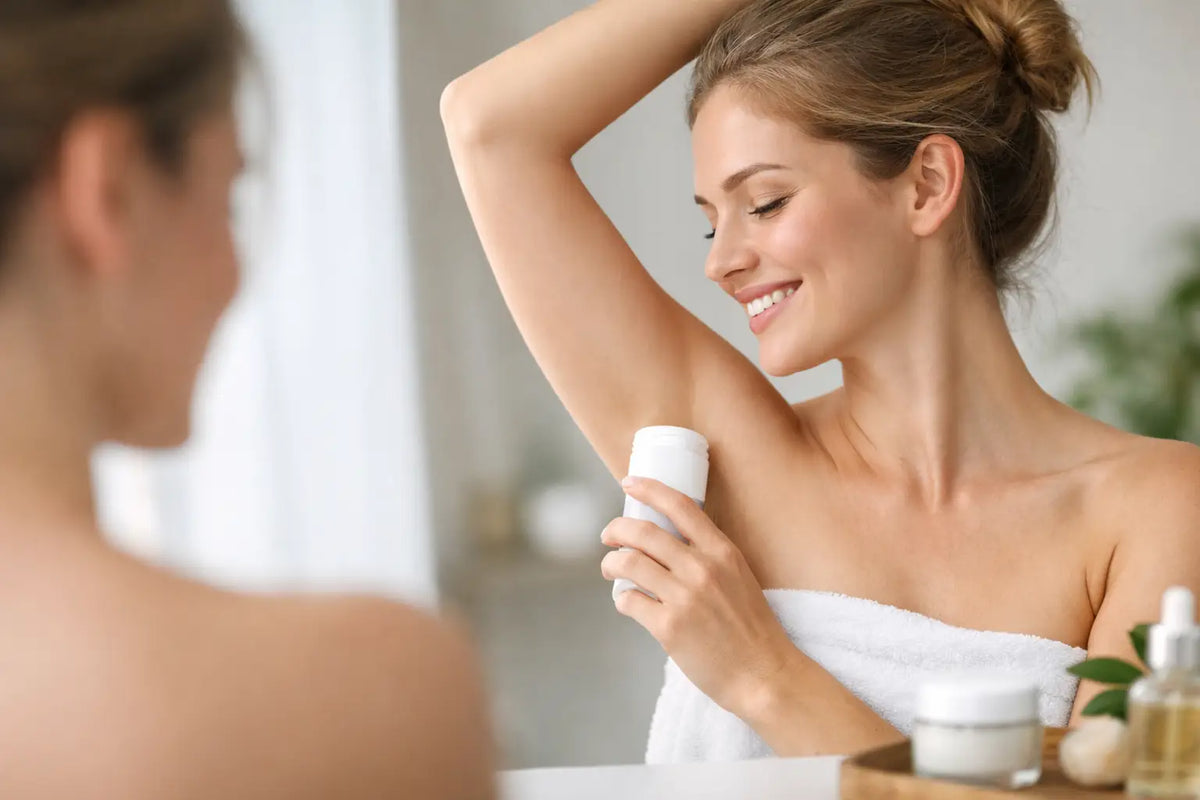
Start with clean, completely dry skin. Applying deodorant to damp underarms can dilute the formula and make it harder to spread evenly. A small amount is usually enough - natural deodorant is designed to sit lightly on the skin, not coat it in thick layers.
Consistency matters more than overapplication. Use your deodorant each morning, and reapply before an event, workout or long day if you know your body needs extra support. For people with sensitive skin, it can help to avoid applying immediately after shaving. Shave at night instead, then apply deodorant in the morning once skin has settled.
Gentle exfoliation once or twice a week may help remove surface build-up, but do not scrub aggressively. The underarm area does not need a harsh treatment to be clean. If your skin stings, flakes or develops persistent bumps, simplify your routine and pause exfoliation until it feels calm again.
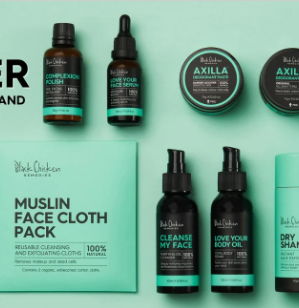
A high-performance natural deodorant such as Black Chicken Remedies Axilla is designed to manage odour while respecting the skin’s natural processes. Look for a formula that feels comfortable on your skin, offers the level of freshness you need, and fits your daily ritual - whether that means a sensitive-skin option, a cream application or a familiar stick format.
When a change in odour needs medical advice
Most changes in underarm scent have an everyday explanation. Still, it is worth checking in with a GP if odour becomes suddenly very strong or unusual, persists despite good hygiene and a consistent routine, or comes with excessive sweating, pain, a rash, swelling or a lump.
Hyperhidrosis, skin infections and some health conditions can affect sweating and body odour. Getting professional advice is a sensible form of self-care, especially if the change is new or affecting your confidence.
Freshness should never require you to fight your body. When you understand your personal triggers and choose care that works with your skin, your underarm routine can become one small, reliable wellness ritual that carries you comfortably through the day.