










Your underarms are warm, enclosed and regularly exposed to friction, sweat and hair removal. When they sting after applying deodorant, that small daily ritual can quickly become uncomfortable. So, why does deodorant irritate skin? Usually, it is not one single ingredient. It is the formula, the condition of your skin and the way your product fits into your routine.
Irritation is common, but it is not something you need to simply put up with. Understanding the likely trigger can help you choose protection that supports sensitive underarms while still delivering the odour control you expect.
Why Does Deodorant Irritate Skin?
The skin in your underarms is more delicate than it looks. It has a thinner protective barrier than many other areas of the body, and it experiences constant rubbing from clothing and arm movement. Add heat, perspiration and freshly shaved skin, and even a well-loved deodorant can start to feel too intense.
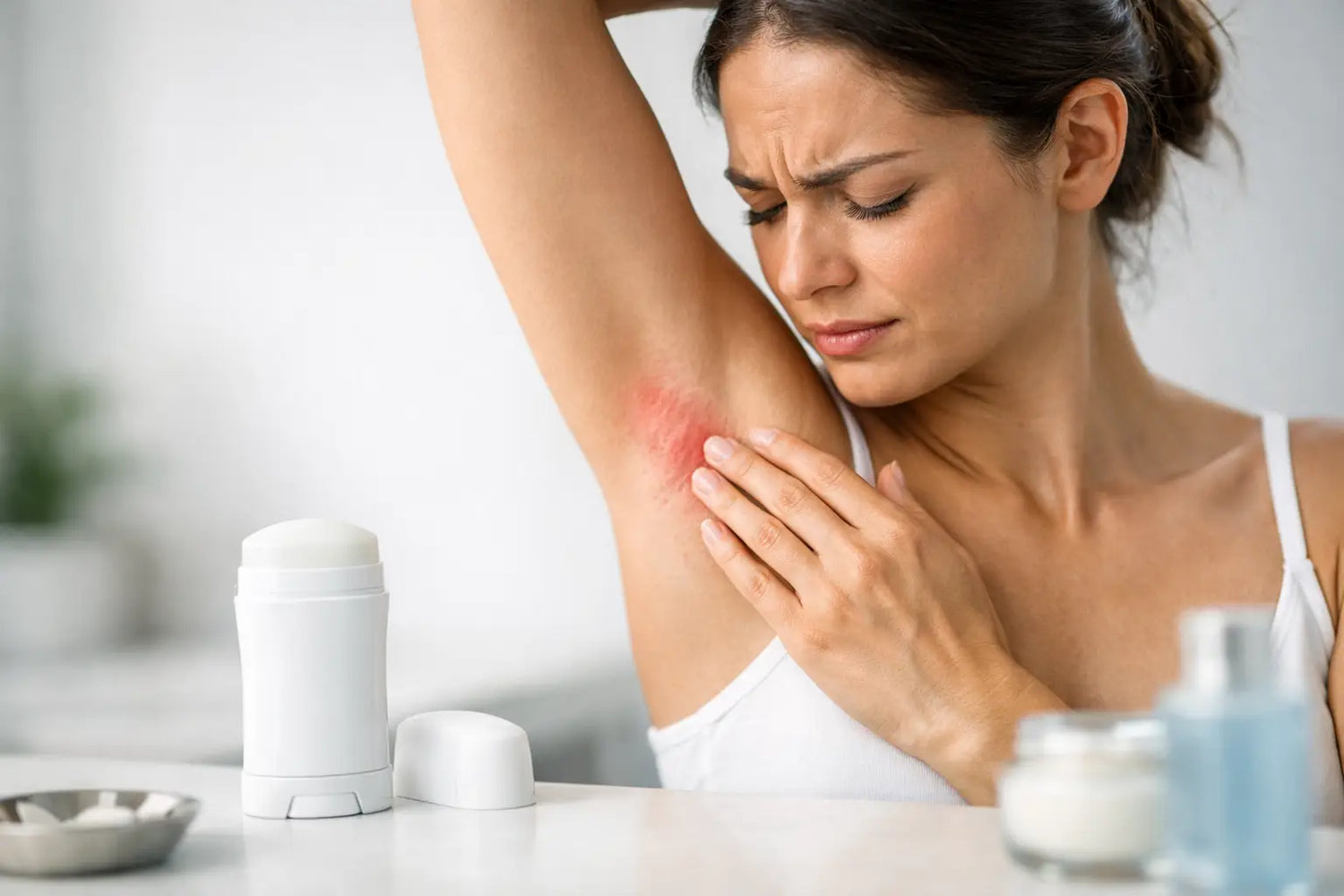
A reaction may show up as redness, itchiness, burning, dry or flaky patches, tender bumps, or a rash. Sometimes it happens straight away. Other times, irritation builds over days or weeks as the skin barrier becomes increasingly stressed.
There are two broad possibilities. Irritant contact dermatitis happens when an ingredient or combination of ingredients overwhelms the skin. Allergic contact dermatitis is an immune response to a particular ingredient, often developing after repeat exposure. The symptoms can look similar, which is why it is useful to pause the product and simplify your routine when your underarms are unhappy.
The Ingredients and Habits That Can Trigger a Reaction
Fragrance is a common culprit. Whether fragrance is synthetic or naturally derived, aromatic compounds can be sensitising for some people. Essential oils can also be beautiful in a wellness ritual, but they are active botanical ingredients. Sensitive skin may react to certain oils, particularly when the underarm barrier is already compromised.
Bicarbonate of soda, also known as baking soda, is another ingredient worth considering. It is popular in natural deodorants because it helps neutralise odour, but its alkaline nature does not suit everyone. Skin is naturally mildly acidic, so frequent use of a highly alkaline formula may disrupt its balance and lead to redness or tenderness. This does not mean bicarbonate is always a problem. Many people use it comfortably, but it can be a clear trigger for reactive underarms.
Some conventional antiperspirants may also cause irritation. Aluminium salts reduce sweat by forming temporary plugs in sweat ducts, and that process can feel uncomfortable for certain skin types. Alcohol, preservatives and strong fragrance blends can add to the issue, especially if several potential irritants are present in one formula.
Your routine matters just as much as the ingredients. Applying deodorant immediately after shaving is a frequent cause of stinging. Shaving creates tiny, often invisible disruptions in the skin, making it easier for a formula to penetrate and irritate. Waxing, exfoliating, wearing tight synthetic clothing and exercising in humid weather can create the same perfect storm.
Even overapplication can work against you. More product does not always mean more protection. A thick layer can sit on the skin, mix with sweat and friction, and make already sensitive underarms feel congested or sore.
How to Calm Irritated Underarms
First, stop using the product that appears to be causing the reaction. Give your underarms a few days free from fragranced deodorant, scrubs and hair removal where possible. Wash gently with lukewarm water and a mild cleanser, then pat the area dry rather than rubbing it with a towel.
Avoid trying to scrub away residue or applying multiple new products to fix the issue. When skin is inflamed, a simpler approach is usually better. Choose loose, breathable cotton clothing for a few days, particularly overnight or during exercise, to reduce heat and rubbing.
If your skin feels dry rather than hot or weepy, a plain, fragrance-free moisturiser can help support the barrier. Be cautious with home remedies, strong essential oils or acids. Natural does not automatically mean non-irritating, and a stressed skin barrier needs calm rather than experimentation.
Once the area has settled, reintroduce deodorant slowly. Test a small amount on one underarm for several days before returning to everyday use. It is not glamorous, but this approach makes it much easier to identify whether a formula genuinely works for your skin.
Choosing Deodorant for Sensitive Underarms
If you have experienced irritation, look beyond broad claims such as “natural” or “clean”. Read the ingredient list and think about what your skin has reacted to before. A fragrance-free option may be helpful if scent is a concern. If bicarbonate has caused redness in the past, choose a bicarbonate-free formula rather than hoping your skin will adjust.
The texture also matters. Cream deodorants can be applied in a controlled, light layer, while sticks may feel more convenient for some routines. There is no universally perfect format. The best choice is one you will use consistently, without discomfort, and that provides reliable odour protection through busy days, gym sessions and warm Australian summers.
Look for formulas designed with skin balance in mind. Ingredients that absorb moisture and help manage odour can be effective without requiring harshness. Plant oils and butters may feel comforting, although anyone prone to blocked follicles or folliculitis may prefer a lighter finish. There is always a trade-off between nourishment, scent, texture and strength, so it pays to choose based on your own skin rather than the loudest promise on the shelf.
Black Chicken Remedies' Axilla range is designed around high-performance natural odour protection with options for sensitive underarms, making it easier to find a formula that suits your daily ritual.
Give Your Skin Time to Adjust, But Do Not Ignore a Rash
Switching deodorants can change how your underarms feel and smell for a short period. A new formula may manage moisture differently, and your body may need time to adapt to a different application amount or texture. However, you do not need a “detox” period to endure burning, swelling or an ongoing rash.
A mild adjustment in odour or dampness can be normal while you find the right product. Persistent irritation is different. Stop using the deodorant if symptoms worsen, spread beyond the underarm, blister, become painful or do not improve after a few days. A pharmacist, GP or dermatologist can help identify whether you are dealing with dermatitis, an allergy, an infection or another skin condition.
If you suspect an allergy, keep a note of the products and ingredients you have used. This can be genuinely useful at an appointment, particularly if the same reaction has happened with perfume, skincare or body wash.
Small Changes That Make a Real Difference
Apply deodorant to clean, fully dry skin, using only the amount recommended for the formula. If you shave, consider doing it at night and applying deodorant the following morning, once your skin has had time to settle. Wash workout clothing promptly, and choose breathable fabrics when you can, as trapped sweat and friction can prolong irritation.
Most importantly, treat your underarms as skin, not just an area to cover up. Effective deodorant should give you confidence to move through the day without asking your skin to tolerate discomfort. A gentler formula, a lighter application and a little patience can turn a daily essential into a wellness ritual that works with your body, not against it.