










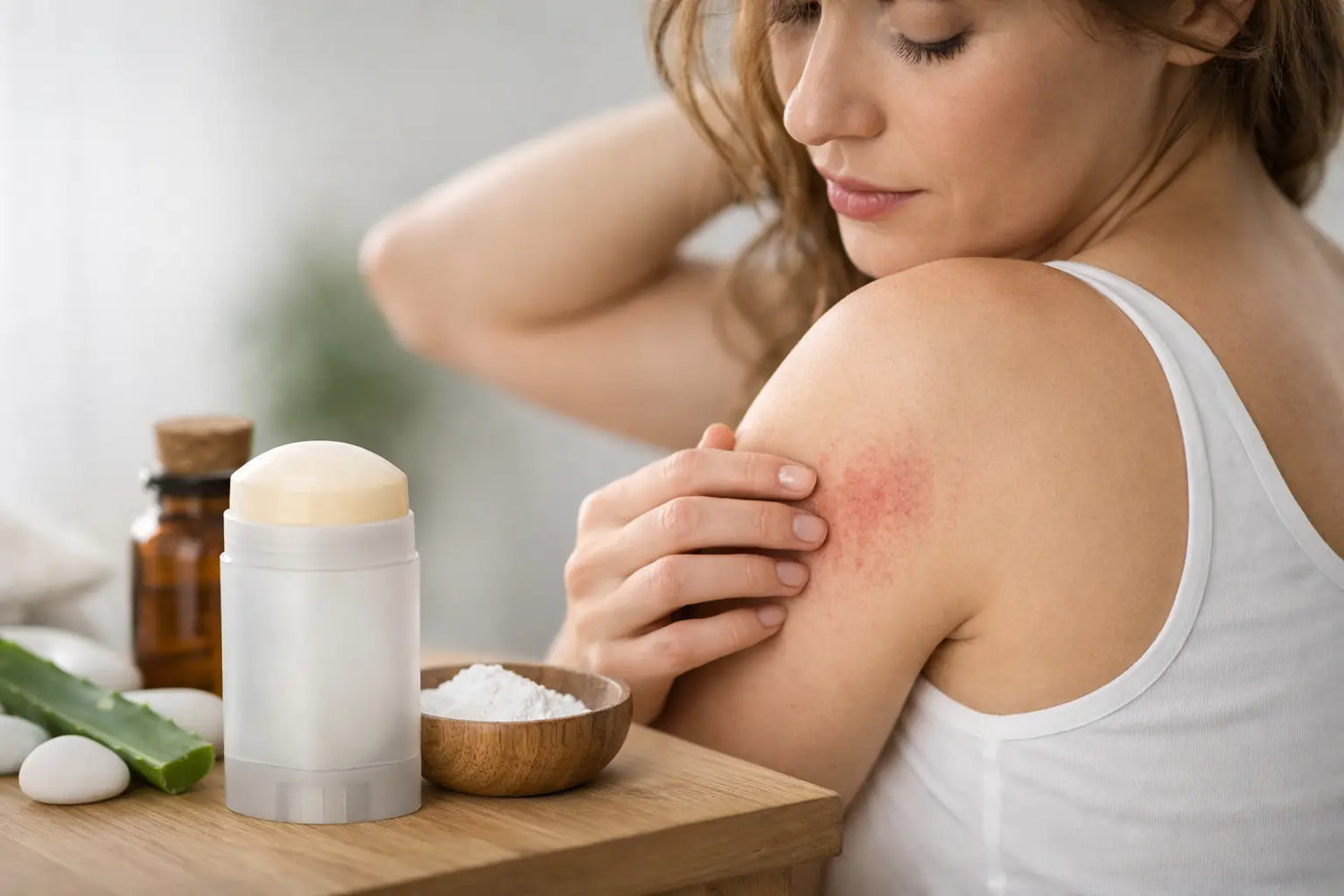
A rash that shows up right after switching deodorants can feel deeply unfair. You choose a cleaner formula for your underarms, and suddenly you are dealing with redness, stinging or an itchy, bumpy patch that makes every arm movement noticeable. If you have been asking why does natural deodorant cause rash, the short answer is this: natural does not always mean non-reactive, especially on delicate underarm skin.
The good news is that a reaction usually points to a specific trigger, not a blanket rule that natural deodorant is wrong for you. Underarms are warm, occluded, freshly shaved and exposed to friction every day, which makes them more reactive than many other areas of the body. Once you understand what is causing the irritation, it becomes much easier to find a formula that supports skin balance while still giving you reliable odour protection.
Why does natural deodorant cause rash on some people?
There is rarely one single answer. Most underarm rashes come down to irritation, sensitivity or a disrupted skin barrier rather than one ingredient being universally bad. A formula that works beautifully for one person may still be too active, too alkaline or too fragrant for another.
One of the most common issues is bicarb, also known as sodium bicarbonate. It is popular in natural deodorants because it helps neutralise odour effectively, but it can also be too alkaline for some skin types. Healthy skin tends to prefer a slightly acidic pH. When a deodorant pushes the skin too far in the other direction, the barrier can become irritated, leading to redness, dryness, itchiness or a burning sensation.
Essential oils can also be a factor. Many people love them for their natural scent and skin benefits, but they are still potent plant compounds. Tea tree, citrus oils, peppermint and other aromatic ingredients may trigger sensitivity in reactive skin, especially when used daily on freshly shaved underarms.
Then there is friction and timing. Applying deodorant straight after shaving can be enough to tip the skin into a rash, even with a thoughtfully formulated product. Shaving creates tiny micro-abrasions in the skin. Add sweat, movement, trapped moisture and active ingredients, and the area can quickly become inflamed.
It is not always an allergy
When people notice a rash, they often assume they are allergic. Sometimes that is true, but often it is irritant contact dermatitis, which is different. An allergy involves the immune system reacting to a particular ingredient. Irritation is more about the skin barrier being overwhelmed.
This matters because the solution can be very different. If the issue is irritation, changing the formula, reducing frequency or avoiding post-shave application may be enough. If it is a true allergy, the triggering ingredient needs to be avoided altogether.
A true allergy may show up as intense itching, persistent redness, swelling or a rash that does not settle quickly once you stop using the product. Irritation often appears more like stinging, dryness, roughness or a rash that improves once the skin is given a break.
The ingredients most likely to trigger underarm irritation
Bicarb gets the most attention for good reason, but it is not the only possible cause. If you are trying to work out why does natural deodorant cause rash for you specifically, look at the formula as a whole.
Fragrance is a major one, whether it comes from essential oils or natural aromatic compounds. Even lovely-smelling botanicals can be too much for sensitive underarms. The underarm area is not the same as the forearm or leg. It is warmer, more occluded and more prone to rubbing, so ingredients can feel stronger there.
Certain absorbent powders can also be drying if the formula is not balanced well. Clays, starches and magnesium are often well tolerated, but in some skin types they can still contribute to tightness or dryness if overused. Preservatives, botanical extracts and even seemingly gentle oils can also be triggers in very reactive skin.
That is why shorter ingredient lists and sensitive-skin-focused formulas are often a smart place to start. A deodorant does not need to be overloaded with actives to perform well.
Your skin barrier may already be compromised
Sometimes the deodorant gets blamed when the skin was already under stress. If you have been shaving more often, using active body products, exfoliating the area or sweating heavily in hot weather, your underarms may already be vulnerable.
A compromised skin barrier is more likely to react to ingredients that would otherwise be fine. This is especially common during a deodorant switch, because people often apply more product than they need or reapply frequently while they adjust. More product does not always mean better protection. It can simply mean more contact with ingredients on already stressed skin.
Heat rash, sweat rash and chafing can also mimic a deodorant reaction. If the rash appears mostly after exercise, humid days or close-fitting clothing, friction and trapped moisture may be contributing just as much as the formula itself.
What to do if natural deodorant gives you a rash
The first step is simple: stop using the product and let the skin settle. If the area is red, sore or itchy, give it a few days without deodorant, shaving or exfoliating. A bland, fragrance-free moisturiser can help support barrier repair if your skin tolerates it.
Once the rash has calmed, think about timing. If you applied the deodorant straight after shaving, try leaving a gap next time. Applying to dry, intact skin often makes a noticeable difference. If the formula contains bicarb or strong essential oils, that may be your next clue.
Patch testing is worth doing, even for underarm products. Test a small amount on the inner arm or a small section of the underarm before daily use. It is not perfect, but it can help identify obvious reactivity.
If the rash is severe, blistering, weeping or persistent, it is best to speak with a GP or dermatologist. Underarm skin conditions can look similar, and fungal irritation, eczema and allergic dermatitis do not always need the same treatment.
How to choose a gentler natural deodorant
If your skin is sensitive, focus less on trends and more on compatibility. A gentler deodorant is usually one that respects the skin barrier while still managing odour effectively. That often means avoiding high levels of bicarb, keeping fragrance low or choosing a fragrance-free option, and looking for nourishing ingredients that help the skin stay comfortable.
Texture matters too. A smooth cream or balm that glides on without dragging can be kinder than a formula that feels dry or powdery. You also want a product that performs well enough that you are not tempted to overapply all day.
This is where high-performance natural formulas designed for sensitive underarms can make a real difference. Black Chicken Remedies has built its deodorant range around that balance - strong odour protection, skin-conscious ingredients and options that are easier to live with daily.
Does the detox theory explain the rash?
You may have heard that switching from conventional deodorant causes a detox period. There is some truth in the adjustment piece, but detox is often overstated. Your body is not purging toxins through a rash because you changed products.
What can happen is that your underarm microbiome, sweat pattern and odour profile shift when you stop using conventional antiperspirants. During that change, you may notice more moisture or odour for a short time. That is very different from a rash.
If your skin is red, itchy, burning or peeling, do not assume it is a normal detox phase you have to push through. That usually means the formula is not right for your skin, or your underarms need recovery before trying again.
When natural deodorant works better
Natural deodorant tends to work best when the formula matches your skin needs and you apply it in a way that supports the barrier. Clean, dry skin helps. So does using only the amount you need. More is not better if your underarms are reactive.
People with sensitive skin often do better with simpler formulas and a consistent routine. If you find one that keeps odour in check without creating stinging or dryness, that is the real goal - not forcing your skin to tolerate a product just because it is popular or labelled natural.
Underarm care is still skin care. The same principles apply: ingredient choice matters, balance matters and your skin will tell you when something is too much. A natural deodorant should make you feel comfortable, confident and protected, not like you have to negotiate with a rash every morning.
If your underarms are reacting, treat that as useful information rather than failure. With the right formula, natural deodorant can absolutely be effective and gentle - and your skin does not need to settle for less.