










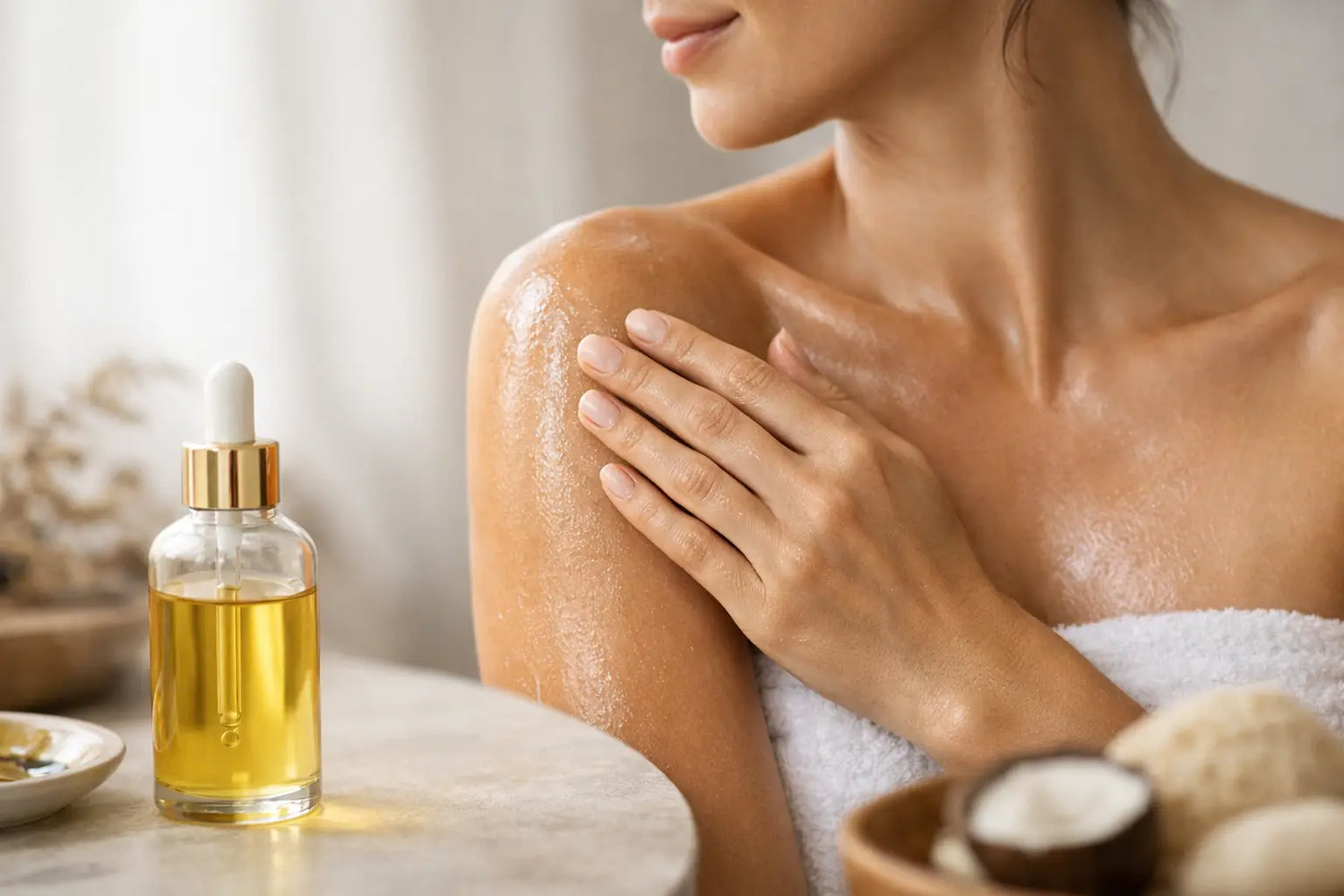
When your skin still feels tight after you’ve moisturised, it’s usually asking for more than a quick fix. The right body oil for very dry skin can make a noticeable difference - not just by adding surface softness, but by helping reduce moisture loss and supporting a calmer, more comfortable skin barrier.
Very dry skin tends to be persistent. It can show up as flaking on the legs, rough patches on elbows, itchiness after showering, or that stretched feeling that never quite settles. In the Australian climate, where hot showers, air conditioning, winter winds and long summers all play a part, it’s common for skin to lose balance quickly. That’s where body oil earns its place in a daily ritual.
Why body oil works for very dry skin
Body oil doesn’t hydrate skin in the same way water-based products do. Its real strength is in sealing in moisture and reinforcing the skin’s protective layer. If your skin barrier is compromised, moisture escapes more easily and irritants are more likely to get in. That’s when skin can feel rough, reactive and hard to manage.
A well-formulated oil helps soften the outer layer of skin and reduces transepidermal water loss. In simple terms, it helps keep the good stuff in. That matters for very dry skin, because moisture retention is often the missing piece.
This doesn’t mean every oil will suit every person. Some oils feel rich and cocooning, while others absorb quickly and leave a lighter finish. If your skin is extremely dry, mature or prone to sensitivity, the best result often comes from choosing a body oil with nourishing plant oils that support the skin without overwhelming it.
What to look for in a body oil for very dry skin
Ingredient quality matters. For very dry skin, you want oils that are naturally rich in essential fatty acids and antioxidants, with a texture that suits your routine. Avocado oil, jojoba oil, sweet almond oil, rosehip oil and coconut-derived emollients are often chosen for their ability to soften and condition dry skin.
Jojoba is particularly useful because it closely resembles the skin’s natural sebum, which can help skin feel balanced rather than greasy. Avocado oil is richer and often suits skin that feels depleted or rough. Rosehip brings added support for skin that looks dull or uneven, while sweet almond oil is a classic for comfort and softness.
It also helps to pay attention to what is not in the formula. Very dry skin is often more reactive, so heavily fragranced products, synthetic fillers and harsh preservatives can be a problem. Natural and certified organic ingredients can be a better fit for people trying to reduce irritation and keep their routine simple.
Essential oils can be a beautiful addition in a body oil, especially when they are used thoughtfully and in skin-friendly concentrations. They can add to the ritual and sensory experience, but if your skin is highly sensitised, it’s worth choosing a gentler formula and patch testing first.
How to use body oil so it actually makes a difference
Timing changes everything. Applying body oil to completely dry skin can still feel nice, but for very dry skin it tends to work best on slightly damp skin straight after a shower or bath. That small amount of water left on the skin gives the oil something to seal in.
Warm a small amount between your palms, then press and smooth it over the body rather than rubbing aggressively. Focus on the areas that lose moisture fastest, like shins, knees, elbows and forearms. If your skin is especially dry, don’t wait too long after towel drying. The window for locking in moisture is short.
Consistency matters more than quantity. A generous application once a week won’t usually do what a lighter daily ritual can. Very dry skin responds well to regular support, especially after bathing, shaving or sun exposure.
For overnight comfort, body oil can also be used as the last step before bed. This is especially helpful in winter, when indoor heating and cooler air tend to leave skin feeling depleted by morning.
Body oil versus body lotion
This is where it depends on your skin and what you need most. Lotions and creams usually contain water as well as humectants and emollients, so they can actively add hydration to the skin. Oils are better at sealing and protecting. If you’re deciding between the two, think of lotion as adding moisture and oil as helping to keep it there.
For some people, body oil alone is enough. For others, especially those with very dry or mature skin, layering works better. Apply a hydrating lotion or cream first, then body oil on top to lock it in. This can be a smart approach when the skin feels both dehydrated and rough.
If you avoid lotions because they feel sticky or take too long to absorb, a well-balanced body oil may be the easier habit to maintain. That matters. The best product is the one you’ll actually use consistently.
Signs your skin needs more than a basic moisturiser
Sometimes dryness is straightforward. Other times, it lingers because the skin barrier is under strain. If your skin feels itchy every day, stings when you apply products, or develops persistent flaky patches, your routine may need to be gentler and more supportive overall.
Over-cleansing is a common issue. Long hot showers, heavily foaming body washes and frequent exfoliation can all strip the skin. If you’re using body oil but still not seeing results, look at what happens before you moisturise. A nourishing oil can help, but it can’t fully offset a routine that keeps disrupting the skin.
It’s also worth being realistic about expectations. Body oil can dramatically improve comfort, softness and appearance, but very dry skin may still need a few weeks of consistent care before it looks and feels stronger.
The best body oil for very dry skin is one you can live with
Texture matters more than people realise. If an oil sits too heavily on the skin, transfers to clothing or leaves you feeling slippery, you’re less likely to use it daily. On the other hand, if it absorbs too fast and doesn’t leave enough lasting comfort, it may not be rich enough for your skin.
That balance between nourishment and wearability is where high-performance natural body care stands out. You want an oil that feels premium, works with your body and fits easily into real life. Something that supports sensitive skin, delivers visible softness, and turns a basic step into a wellness ritual you look forward to.
For many people, the ideal choice is a botanical body oil that leaves skin supple rather than coated. It should help reduce that tight, papery feeling and give the skin a healthier glow without relying on synthetic heaviness.
A few practical tips for better results
If you want your body oil to work harder, keep showers warm rather than hot, pat skin dry instead of rubbing, and exfoliate gently no more than needed. Dry brushing and scrubs can be helpful for some skin types, but if your skin is irritated or cracked, less is more.
You can also adjust your routine seasonally. In summer, a lighter layer may be enough, especially on damp skin. In winter, very dry skin often benefits from a richer application and occasional layering over a cream. There’s no need to force one method year-round if your skin is clearly asking for something different.
If you’re pregnant, navigating hormonal skin changes, or dealing with skin that has become more reactive with age, body oil can be a comforting part of a simpler routine. The key is choosing a formula that respects sensitivity while still delivering enough nourishment to feel effective.
At Black Chicken Remedies, that balance between natural ingredients and real performance sits at the heart of body care. Because when skin is very dry, you don’t just want a product that sounds good - you want one that leaves your skin feeling resilient, comforted and genuinely cared for.
Very dry skin rarely responds to shortcuts. But with the right body oil, used consistently and applied well, your daily moisturising step can become the moment your skin starts feeling like itself again.