












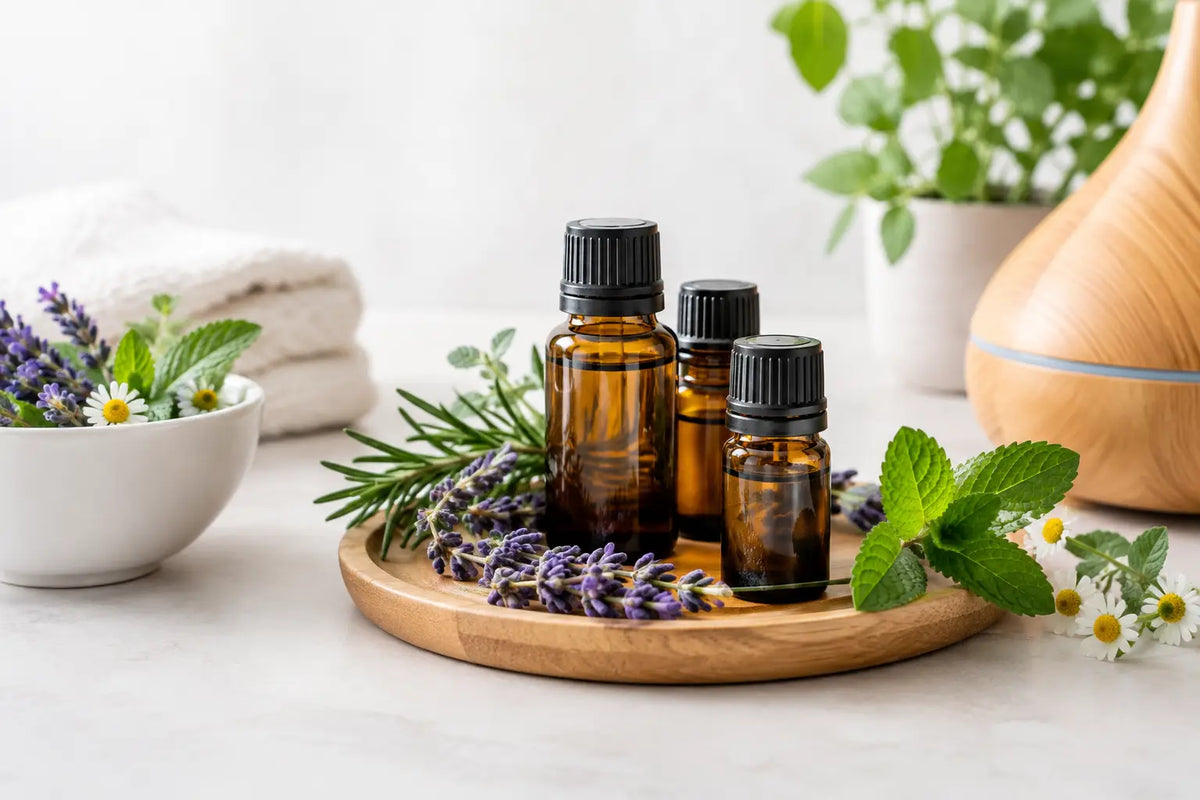
A few drops can change the feel of a shower, a bedtime wind-down or a slow Sunday bath. Essential oils are concentrated plant extracts, though, not harmless fragrance. This essential oil safety guide is designed to help you enjoy their aromatic benefits with the care your skin, household and wellness rituals deserve.
Natural can be a wonderful choice for sensitive-skin routines, but it is not a free pass to use more. The safest approach is simple: choose quality oils, use less than you think you need, dilute correctly and pay attention to how your body responds.
Essential oil safety guide: start with dilution
Undiluted essential oils can irritate skin, trigger an allergic reaction or cause a burn-like response, particularly on the face, underarms, chest and other delicate areas. Even oils that smell soft and familiar, such as lavender or peppermint, can be too strong when applied neat.
For body care, a dilution of around 1 to 2 per cent is a sensible starting point for most healthy adults. In practical terms, that is roughly one drop of essential oil per 5 mL of carrier oil for a 1 per cent blend, or two drops per 5 mL for a 2 per cent blend. Drop sizes vary, so if you are making larger batches, weighing ingredients is more accurate than counting drops.
A carrier oil disperses the essential oil and makes application gentler. Jojoba, fractionated coconut, sweet almond and grapeseed oils are common choices, but the right base depends on your skin and preferences. Those with nut allergies should avoid nut-derived carrier oils. For facial care, stay at the lower end of the dilution range, especially if your skin is reactive, dry or compromised.
Water does not dilute essential oils. Adding drops directly to a bath can leave them floating on the surface, where concentrated oil may settle against the skin. Blend essential oils into a suitable dispersant or a ready-made bath and body formula instead. A pre-formulated product takes the guesswork out of ratios and is often the easiest option for a consistent ritual.
Patch test, then take your time
A patch test is a helpful precaution before using a new essential oil blend or body product more widely. Apply a small amount of the properly diluted blend to the inner arm, then leave it for 24 to 48 hours. Watch for redness, itching, stinging, swelling or a rash.
A clear patch test does not guarantee that a reaction will never happen. Sensitivity can develop over time, particularly when the same oil is used frequently or at high concentrations. If your skin starts to feel hot, itchy or uncomfortable, wash the area with a carrier oil or gentle cleanser and stop using the product. Water alone can spread oil across the skin rather than lift it away.
Choose the right way to use essential oils
How you use an oil matters just as much as which oil you choose. Topical use, inhalation and bathing each call for different precautions.
For topical use, keep blends away from the eyes, lips, inner ears and other mucous membranes. Wash your hands after application, especially before touching your face or handling contact lenses. Never apply essential oils to broken, freshly shaved, sunburnt or inflamed skin.
For aromatic use, start with a short session and a low amount in your diffuser. A few drops are usually enough to scent a room. Keep the space well ventilated and take breaks rather than running a diffuser all day. If the aroma gives you a headache, makes you feel nauseated or irritates your throat, switch it off and air out the room. More fragrance does not mean more benefit.
Inhalers offer a contained, low-fuss alternative for moments when you want a scent close by without fragrancing the whole room. Keep them for occasional use rather than constant inhalation, and avoid sharing them between people.
Essential oils are not for swallowing unless a qualified health professional has specifically advised you to use a product that way. “Food-grade” on a label does not make an essential oil appropriate or safe to ingest. Concentrated oils can interact with medicines and may irritate the mouth, throat and digestive system.
Sun, citrus and photosensitivity
Some citrus essential oils can increase the skin’s sensitivity to ultraviolet light. This is known as photosensitivity, and it can lead to redness, pigmentation or blistering after sun exposure. Cold-pressed bergamot, lemon, lime, grapefruit and bitter orange are common examples.
If you use a citrus blend on exposed skin, check whether the oil is phototoxic and follow the product directions carefully. The conservative choice is to avoid sun exposure and tanning beds on the treated area for at least 12 to 18 hours. Steam-distilled citrus oils can behave differently, which is why reading the full ingredient and safety information matters.
This is especially relevant in Australia, where incidental sun exposure can happen on a quick walk, school run or coffee stop. If in doubt, reserve citrus oils for an evening ritual, wash the area before heading outdoors, or use them in a diffuser instead.
Extra care for children, pregnancy and pets
Essential oils should always be stored out of reach of children. Young children have smaller bodies, more delicate skin and different sensitivities to adults, so adult dilution guidelines do not apply. Some oils, including peppermint and eucalyptus varieties, can be unsuitable around infants and young children because their strong vapours may affect breathing.
During pregnancy and breastfeeding, it is wise to keep routines simple and seek personalised advice from your midwife, doctor or qualified practitioner before using essential oils. The same applies if you have asthma, allergies, epilepsy, high blood pressure, a skin condition or are taking regular medication. An individual recommendation is more useful than a one-size-fits-all list of oils to avoid.
Pets also need consideration. Cats, dogs, birds and other animals process aromatic compounds differently, and birds can be particularly sensitive to airborne fragrances. Diffuse only in a well-ventilated area where pets can leave the room, never apply human essential oil blends to an animal, and speak with a veterinarian if you are unsure.
Storage protects both quality and safety
Heat, light and air change essential oils over time. As oils oxidise, they can become more likely to irritate the skin. Keep bottles tightly closed in a cool, dry cupboard away from direct sunlight, rather than on a sunny bathroom shelf or beside a hot shower.
Keep each oil in its original labelled bottle so you can check its botanical name, batch details and recommended use. If an oil smells noticeably different, looks cloudy when it should be clear, or has passed its recommended period after opening, it is best to replace it. Old oils are not worth the risk of a skin flare-up.
It also pays to label any DIY blend with the ingredients and date it was made. This makes it easier to identify what worked beautifully for your skin and what may have caused a reaction.
Make your ritual work with your body
The most effective wellness ritual is one you can use comfortably and consistently. Start with one well-chosen oil or a carefully formulated blend, rather than layering scents and active botanicals all at once. Gentle use is not a compromise on performance - it is how you create a ritual that respects your skin barrier, senses and daily life.
At Black Chicken Remedies, we believe natural self-care should feel reassuring as well as beautiful. Choose products made for their intended purpose, follow their directions, and give your body permission to set the pace. A softer scent, a smaller dose and a little more care can make all the difference.