












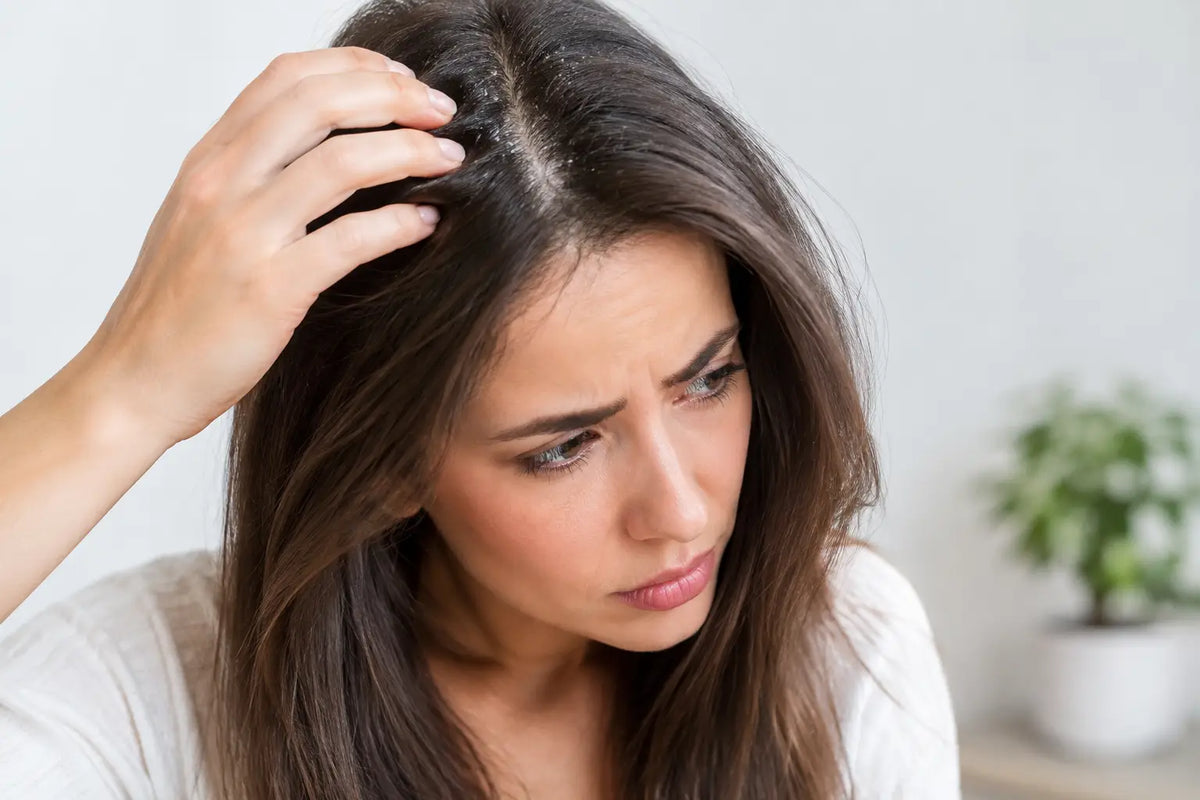
Flakes on your black top are frustrating enough. A scalp that feels tight, itchy or sore is a stronger signal that its natural balance needs attention. So, what causes flaky scalp skin? It is not always simply dryness. Flaking can come from dandruff, product irritation, a skin condition or the way your hair and scalp are being cared for.
The best solution depends on the cause. Adding more oil to a dry scalp may feel comforting, for example, but may not help dandruff. Likewise, harshly scrubbing flakes away can worsen an already irritated scalp. A gentle, consistent routine gives your scalp the space to settle while you identify what is driving the problem.
What causes flaky scalp skin most often?
Your scalp constantly sheds skin cells, but they are usually too small to notice. Visible flakes appear when that renewal process speeds up, when the scalp barrier becomes disrupted, or when oil, dead skin and product residue collect on the skin.
Dandruff and seborrhoeic dermatitis
Dandruff is one of the most common reasons for recurring flakes. It is associated with a naturally occurring yeast called Malassezia, which feeds on scalp oils. Some people are more sensitive to the by-products it produces, leading to faster skin-cell turnover, itchiness and white or yellowish flakes.
Seborrhoeic dermatitis is a more inflamed form of the same process. The scalp may look red, feel tender and develop greasy, yellow-toned scale. It can also show up around the eyebrows, sides of the nose or behind the ears. This is not a sign that your hair is unclean. In fact, stress, hormonal shifts, colder months and changes in routine can all make it more noticeable.
A dry or compromised scalp barrier
A genuinely dry scalp often produces smaller, dry white flakes alongside tightness or itch. Long hot showers, frequent shampooing, very dry air, air conditioning and heated styling tools can all strip away the lipids that help the scalp retain moisture.
Australian summers add another layer. UV exposure, salt water and chlorine can leave the scalp feeling parched, particularly if you swim often or wear your hair exposed in the sun. In winter, indoor heating and lower humidity can create a similar effect.
Dryness and dandruff can look alike, but they are managed differently. Dryness tends to feel tight and produce fine powdery flakes. Dandruff often comes with oiliness, more persistent itch and larger flakes that cling to the scalp or hair. It is also possible to have an oily scalp with dry, sensitised lengths.
Product build-up and infrequent cleansing
Dry shampoo, styling creams, hairspray, scalp oils and even a favourite shampoo can leave residue when they are not thoroughly rinsed. Build-up does not always cause flakes by itself, but it can trap dead skin and make existing flaking more obvious.
Going too long between washes can also be unhelpful for some scalps, especially if dandruff is involved. Oil and sweat create an environment where flakes may accumulate. The right wash frequency is personal: some people need a gentle wash every second day, while others do well washing less often. The goal is a scalp that feels comfortable and clean, not squeaky or stripped.
Contact dermatitis and ingredient sensitivity
A flaky, itchy scalp that begins after introducing a new product can be a sign of contact dermatitis. This is an irritation or allergy caused by something touching the skin, such as fragrance, essential oils, hair dye, preservatives, strong surfactants or styling products.
Irritant reactions can happen quickly, especially when the skin barrier is already stressed. Allergic reactions may develop after repeated exposure to an ingredient you previously tolerated. Redness, burning, swelling, weeping or a rash that spreads beyond the hairline all deserve more care than a change of shampoo alone.
Natural ingredients can be beautifully supportive, but natural does not automatically mean suitable for every sensitive scalp. A considered formula, a patch test and introducing one new product at a time are practical ways to reduce guesswork.
Skin conditions such as psoriasis and eczema
Scalp psoriasis can cause thicker, well-defined silvery scale, sometimes extending beyond the hairline. It may also appear on the elbows, knees, lower back or around the ears. Scalp eczema can cause dry, inflamed, itchy patches and may sit alongside eczema elsewhere on the body.
These conditions are not caused by poor hair care, and they often need individual treatment advice. If flakes are thick, painful, bleeding, persistent or affecting your confidence, speak with a GP, dermatologist or pharmacist. Getting the right diagnosis can save months of trial and error.
Hair habits that can make flaking worse
Small everyday habits can keep a reactive scalp in a cycle of irritation. Very hot water, vigorous scratching with fingernails and aggressive exfoliation can all damage the barrier. So can washing with a cleanser that leaves your scalp feeling tight straight after rinsing.
Hair colouring, bleaching, chemical straightening and frequent heat styling can be triggers too. That does not mean you need to give them up entirely. It means your scalp may benefit from spacing services out, protecting the hairline during colouring, and choosing a simpler routine before and after a treatment.
Stress and poor sleep can also influence inflammatory skin conditions, including dandruff and eczema. They are rarely the sole cause, but they can be the reason a previously manageable scalp suddenly starts flaking again. A calm evening ritual and adequate rest support whole-body wellbeing, including the skin.
A gentle routine for a more comfortable scalp
Start by simplifying rather than adding five new treatments at once. Wash your scalp thoroughly with lukewarm water and a gentle shampoo suited to your symptoms, focusing on the skin rather than roughing up the hair lengths. Rinse for longer than you think you need to, particularly around the crown and nape where residue can linger.
If your scalp seems dry or reactive, avoid fragranced styling products and strong exfoliants for a couple of weeks. Use conditioner mainly through mid-lengths and ends unless the product is specifically designed for scalp use. Keep brushes, combs, pillowcases and hats clean, particularly if you use dry shampoo or workout regularly.
For dandruff-like flaking, a pharmacy anti-dandruff shampoo may be the most effective first step. These use active ingredients designed to reduce yeast, scaling or inflammation. Follow the instructions closely, as many need a few minutes of contact time before rinsing. If it leaves your hair feeling dry, alternate it with a gentle everyday shampoo rather than abandoning treatment too soon.
It can help to keep a simple note of when symptoms flare. Record new products, hair appointments, weather changes, stress levels and wash frequency. Patterns often become clearer after two or three weeks, and that information is useful if you need professional advice.
When flaky scalp skin needs professional care
Book in with a health professional if flaking lasts longer than several weeks despite a gentler routine, or if you have significant redness, pain, swelling, crusting, bleeding, hair loss or pus-filled bumps. Seek prompt advice if you think you are having an allergic reaction to hair dye or another product.
Children, people with a weakened immune system, and anyone with sudden patchy hair loss should also be assessed rather than self-treating. A clinician can distinguish dandruff from psoriasis, fungal infection, dermatitis and other causes that look similar at first glance.
Your scalp does not need harsh treatment to feel fresh. Give it consistent, thoughtful care, choose formulas that respect sensitive skin, and let persistent symptoms guide you towards the right support. Comfort is a worthwhile result in its own right.