












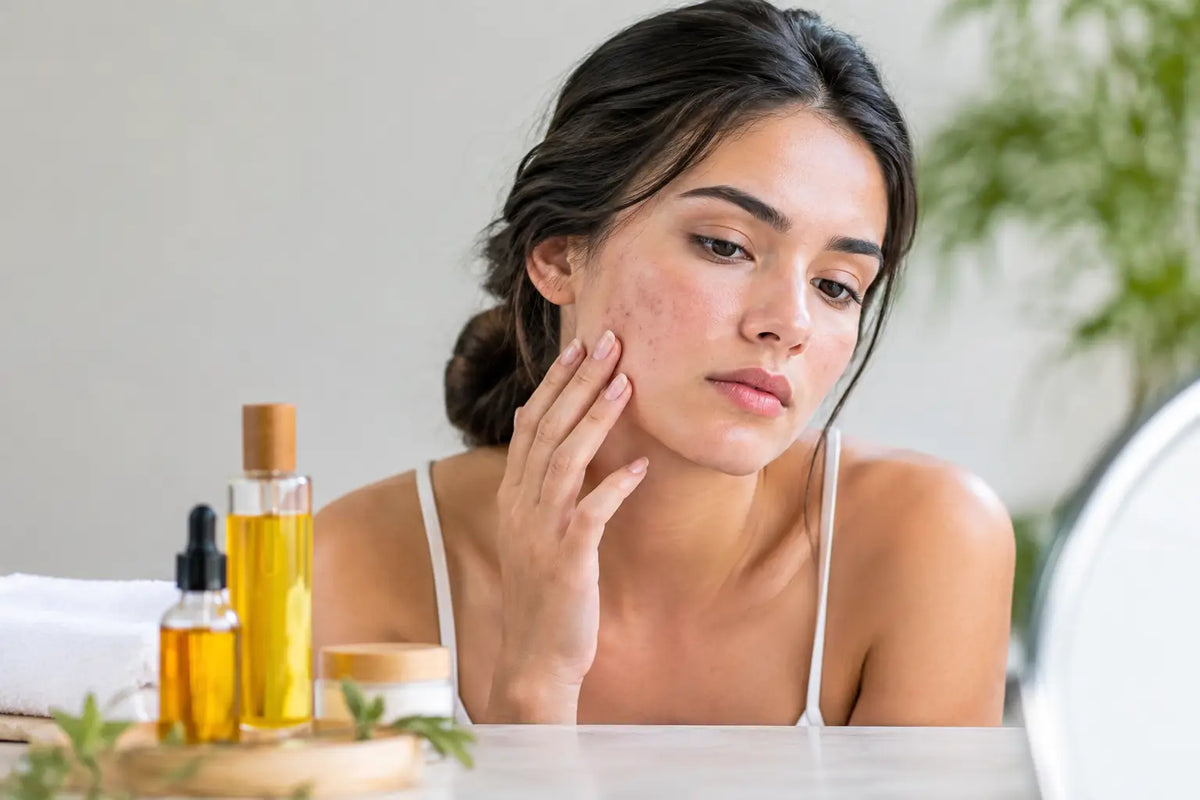
Your shoulders, chest or back feel beautifully soft after a body oil ritual, then a cluster of bumps appears a few days later. It is frustrating, especially when you have chosen a natural product to care for sensitive skin. So, can body oils cause acne? They can contribute to breakouts for some people, but oil itself is not automatically the problem. The formula, your skin type, where you apply it and what else is happening on your skin all matter.
The aim is not to fear body oil. It is to find a ritual that supports your skin barrier, feels nourishing and does not leave breakout-prone areas congested.
Can body oils cause acne? The direct answer
Body oils can worsen acne when they trap sweat, dead skin cells and bacteria inside pores that are already prone to blocking. This is more likely on the chest, back and shoulders, where oil glands are active and breakouts can be influenced by heat, exercise, tight clothing and friction from bags or activewear.
That does not mean body oils create acne from nothing. Acne is a complex skin condition involving excess sebum, blocked follicles, inflammation and, often, hormonal shifts. A rich or unsuitable oil may be one piece of the picture, particularly if you notice breakouts consistently appearing where you apply it.
For dry, reactive or mature skin, the right body oil can be a very helpful part of daily care. It can soften roughness, reduce that tight post-shower feeling and help seal in hydration. The difference comes down to choosing a formula your skin can comfortably live with, rather than simply choosing the richest one on the shelf.
Why a body oil may trigger congestion
The formula is more than one oil
A bottle labelled body oil may contain a blend of plant oils, butters, waxes, fragrance and essential oils. Some textures are naturally richer and more occlusive than others. On dry legs or elbows, that can feel deeply comforting. On a sweaty upper back, it may feel like too much.
Heavier products are not inherently bad, and lighter products are not automatically better. Your individual response is the useful measure. If a product leaves a persistent film, makes your skin feel hot or seems to coincide with small clogged bumps, it may not suit that area of your body.
Comedogenic ratings can offer a starting point, but they are not a verdict. These scales are often based on limited testing and do not account for the full formula, how much you use or your personal skin chemistry. A simple, well-made blend may suit one person beautifully and cause congestion for another.
Application can create an occlusive layer
Even a body oil that suits your skin can become problematic when applied too generously. Slathering oil onto dry skin before a workout, then covering it with fitted activewear, creates a warm and humid environment. Add friction and sweat, and follicles may become more likely to clog or inflame.
This is why timing matters. Applying a small amount after a shower and allowing it to settle before dressing is very different from reapplying throughout a hot day. In the Australian climate, especially during humid weather, lighter application on acne-prone areas often makes sense.
Breakouts may not be acne
Not every bump is acne. Folliculitis, irritation, heat rash and contact dermatitis can look similar at first glance. Folliculitis often appears as a sudden crop of small, similar-looking bumps and may feel itchy or tender. Fragrance, essential oils or other ingredients can also irritate sensitised skin, creating redness and bumps that resemble a breakout.
If a rash is painful, very itchy, spreading or not improving, it is worth speaking with a pharmacist, GP or dermatologist. Skin deserves care that is both natural-minded and evidence-informed.
How to use body oil without overloading breakout-prone skin
Start with less than you think you need. Apply a few drops to clean, slightly damp skin after showering, then press or smooth it over areas that tend to feel dry. Damp skin helps the oil spread more evenly, so you can get softness without using a heavy layer.
Be selective about placement. Your shins, arms, hands and elbows may happily enjoy a richer body oil, while your chest, upper back and shoulders prefer a lightweight lotion or no leave-on product at all. Treating your body as one skin type can lead to frustration. It is completely reasonable to use different textures on different areas.
Give a new product time to show you how your skin responds. Introduce it on a small area first and use it consistently for around one to two weeks. If you are changing your cleanser, exfoliant and body oil at the same time, you will not know what has helped or hindered your skin.
Keep post-exercise care simple too. Change out of sweaty clothing promptly, shower when practical and avoid applying a rich oil immediately before training. Clean towels, breathable fabrics and regular washing of activewear can make a meaningful difference to body breakouts.
Choosing a body oil for sensitive, acne-prone skin
Look beyond marketing terms such as natural, pure or organic. Natural ingredients can be beautiful for skin, but natural does not always mean non-irritating or non-comedogenic for every person. Choose products with a clear ingredient list and a texture that matches your needs.
If you are prone to body acne, a lightweight blend with a simple formula is often a sensible place to start. Avoid adding multiple fragranced products to the same area, particularly if your skin is reactive. A scented body wash, fragranced oil and perfume layered on the chest may be too much for skin that is already easily inflamed.
Pay attention to the finish as well as the ingredients. The best body oil for you should absorb comfortably, leave skin supple rather than coated and fit easily into your day. A product that feels luxurious but transfers onto clothes, traps heat or makes you avoid movement is unlikely to become a sustainable ritual.
At Black Chicken Remedies, we believe body care should work with your skin, not ask your skin to tolerate discomfort for the sake of a ritual. That means giving your skin room to tell you what it needs, whether that is more nourishment, fewer layers or a gentler approach.
When body oil is not the main issue
If you have persistent acne on the back, chest or shoulders, look at the broader routine. Hair conditioner and styling products can run onto the back in the shower and leave residue behind. Some people find that rinsing their hair first, then cleansing the body afterwards, helps reduce congestion along the shoulders and upper back.
A gentle chemical exfoliant formulated for body acne may also be useful, particularly one containing salicylic acid. Start slowly, as over-exfoliating can damage the skin barrier and make irritation worse. If you use an exfoliating treatment, avoid layering a heavy oil over the same area straight away unless you know your skin tolerates it well.
Hormonal changes, stress, medication, genetics and sweating can all play a role. When breakouts are deep, painful, scarring or affecting your confidence, professional support can make a real difference. You do not need to troubleshoot stubborn acne alone.
Your body oil ritual should leave your skin feeling calm, comfortable and cared for. Use it where it brings softness, scale it back where your pores need breathing room, and let your skin guide the routine from there.